 English
 русский
 Tiếng Việt
 Español

-
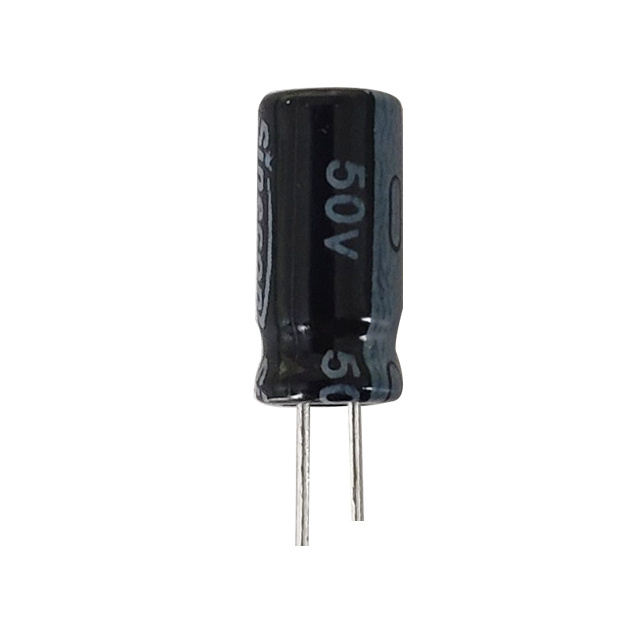
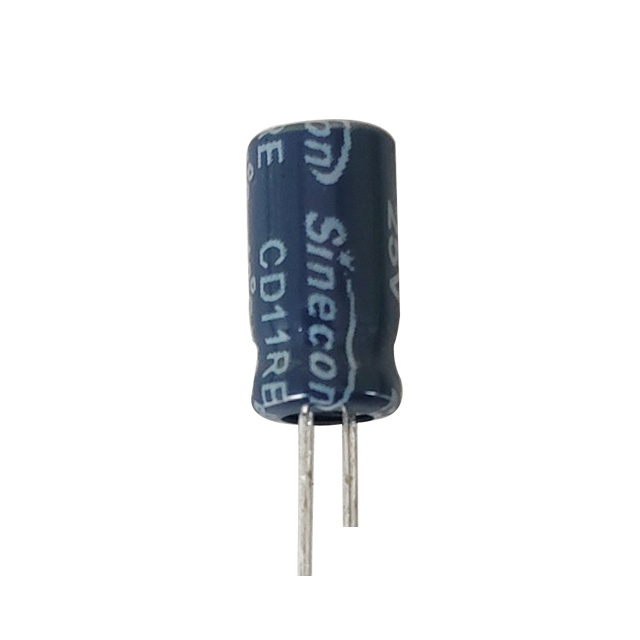
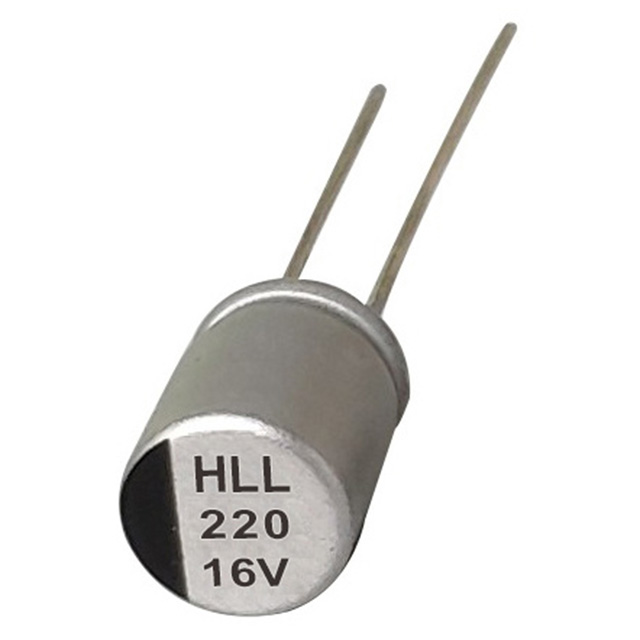
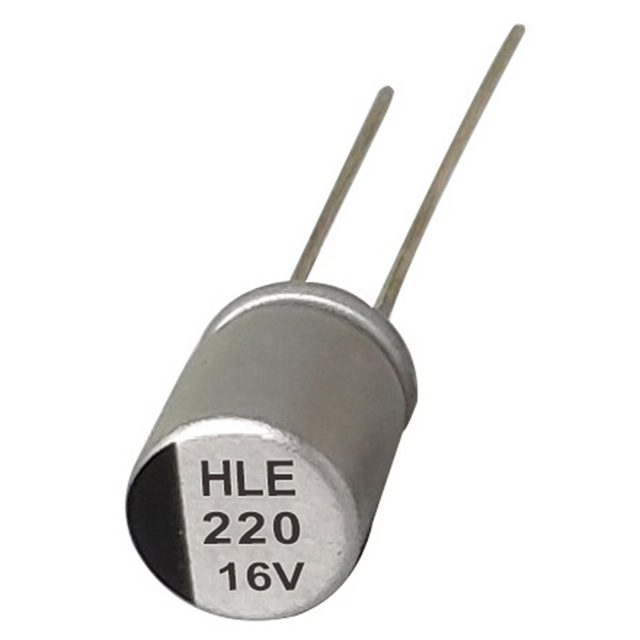
Low Equivalent Series Resistance (ESR) Design: The Radial Lead Solid Aluminum Capacitor is engineered with a focus on minimizing Equivalent Series Resistance (ESR), which is crucial for high-frequency ripple current management. ESR represents the inherent resistive component in the current path and directly affects energy dissipation in the form of heat during rapid charge and discharge cycles. Excessive ESR not only reduces efficiency but also accelerates capacitor degradation due to thermal stress. By utilizing high-conductivity polymer electrolytes and optimizing internal electrode connections, the capacitor maintains a consistently low ESR across a broad frequency range and operating conditions. This low-resistance design allows it to handle higher ripple currents with minimal heat generation, ensuring stable voltage performance and preventing premature aging or capacitance drift over time, making it particularly suitable for high-speed switching regulators, DC-DC converters, and industrial power electronics.
-
Solid Polymer Electrolyte: Unlike conventional liquid electrolytes, the Radial Lead Solid Aluminum Capacitor employs a solid conductive polymer, which provides superior ionic conductivity and low resistive loss. Solid polymers exhibit more consistent electrical properties under high-frequency conditions, enabling the capacitor to efficiently conduct rapidly fluctuating currents without localized overheating. This polymer electrolyte also offers enhanced chemical stability and resistance to drying, evaporation, or leakage, common failure modes in traditional electrolytic capacitors. The solid electrolyte ensures that high-frequency ripple currents are absorbed and filtered efficiently while maintaining the capacitor’s structural integrity and capacitance over prolonged operation, contributing to long-term reliability in demanding electronic circuits.
-
Optimized Electrode and Layering Structure: The internal structure of the Radial Lead Solid Aluminum Capacitor is carefully designed with multiple layers of high-purity aluminum foil separated by a stable dielectric oxide layer. The electrode geometry maximizes surface area, providing a greater current-carrying capacity and uniform distribution of ripple currents across the internal layers. This reduces localized hotspots that could otherwise lead to thermal degradation or accelerated ESR increase. Uniform layer spacing and optimized electrode design allow the capacitor to handle high-frequency ripple currents effectively, maintaining stable capacitance and minimizing internal losses. The layered design also contributes to the capacitor’s ability to tolerate thermal cycling without degradation, making it ideal for continuous operation in high-speed switching applications.
-
Thermal Management and Heat Dissipation: Managing heat generated by high-frequency ripple currents is critical for capacitor longevity. The Radial Lead Solid Aluminum Capacitor is constructed with materials that efficiently conduct and dissipate heat away from the dielectric layers, including the solid polymer and aluminum foils. Epoxy encapsulation and radial lead design further facilitate heat transfer to the PCB or surrounding environment. By maintaining lower internal temperatures during ripple-heavy operation, the capacitor reduces thermal stress on the dielectric and prevents ESR increase or capacitance drift. Effective thermal management ensures that the capacitor remains reliable and stable, even under continuous high-current, high-frequency operation typical of modern switching power supplies and inverter circuits.
-
Mechanical Stability and Radial Lead Design: The radial lead configuration not only provides ease of PCB mounting but also contributes to mechanical stability under high-frequency operation. Rapid charge and discharge cycles induce small mechanical forces within the capacitor body due to electrostatic interactions and thermal expansion. The radial leads absorb and distribute these stresses, preventing strain on the internal dielectric layers that could otherwise create micro-cracks, delamination, or ESR increases. By maintaining internal mechanical integrity, the capacitor sustains reliable ripple current performance and dimensional stability over its operational lifetime, even in vibration-prone industrial or automotive environments.