 English
 русский
 Tiếng Việt
 Español

-
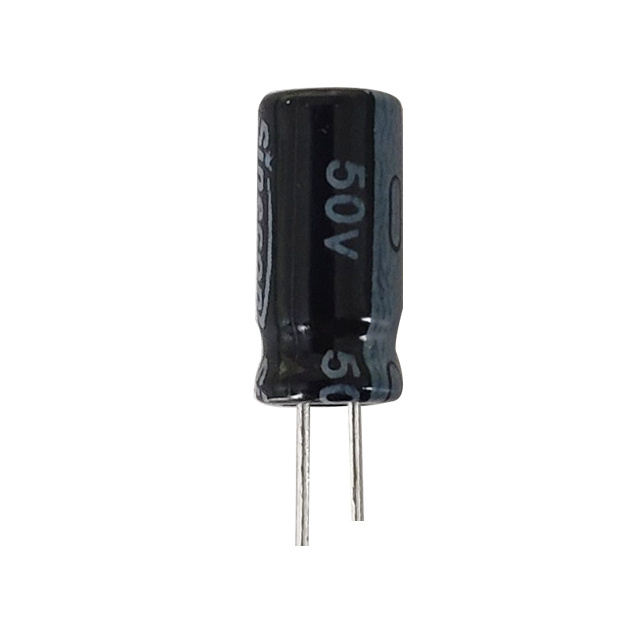
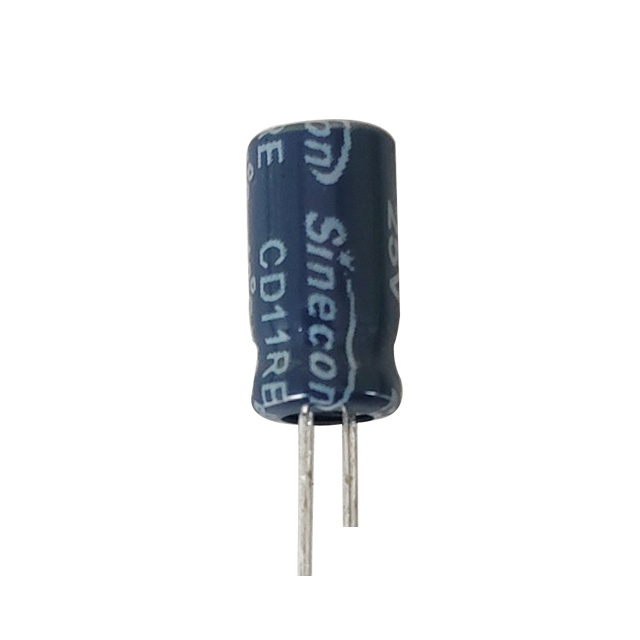
High-Quality Dielectric Materials: The Radial Lead Solid Aluminum Capacitor utilizes a solid-state aluminum oxide dielectric in combination with a solid polymer electrolyte, which provides exceptional chemical and thermal stability compared to traditional liquid electrolytes. The solid dielectric prevents issues such as drying, leakage, or chemical degradation that commonly occur in liquid-based capacitors over time. High-purity anodized aluminum oxide ensures a uniform and stable dielectric layer, which maintains capacitance precision even under prolonged electrical stress and high-temperature conditions. By eliminating reliance on liquid electrolytes, the capacitor avoids capacitance drift caused by evaporation, electrolyte breakdown, or chemical reactions, ensuring stable performance across extended operating lifetimes, which is especially critical in precision electronic circuits, power supplies, and industrial applications.
-
Stable Equivalent Series Resistance (ESR): The Radial Lead Solid Aluminum Capacitor is engineered to maintain a low and stable ESR throughout its operational lifetime. ESR directly affects power dissipation, heat generation, and ripple current performance, and an increasing ESR over time can lead to excessive heating, accelerated aging, and capacitance drift. By selecting high-quality conductive polymers and optimizing internal construction, these capacitors maintain stable ESR under varying temperature, frequency, and voltage conditions. The stable ESR ensures minimal energy loss and consistent performance in high-frequency switching circuits, DC-DC converters, and other applications where efficiency and thermal management are critical, preventing long-term degradation and maintaining reliable electrical characteristics.
-
Thermal Management and Tolerance: Thermal stability is a core factor in long-term reliability. The Radial Lead Solid Aluminum Capacitor is designed to operate within a wide temperature range, often up to 105°C or higher, with minimal impact on capacitance or ESR. The internal materials, including the solid dielectric and polymer electrolyte, are optimized to resist thermal expansion and contraction that can stress the dielectric layers. By maintaining structural integrity under frequent temperature cycling or prolonged high-temperature operation, the capacitor avoids internal micro-cracking, delamination, or chemical degradation that could lead to capacitance drift. This robust thermal tolerance ensures predictable performance over thousands of hours of operation in industrial, automotive, or high-power electronic systems.
-
Self-Healing Properties: A unique advantage of solid aluminum capacitors is their ability to self-heal minor dielectric imperfections. If micro-defects or localized short circuits occur within the dielectric, the solid polymer or conductive polymer electrolyte can re-passivate the affected area, restoring insulation and preventing permanent failure. This self-healing capability prevents gradual capacitance loss or drift that might otherwise occur over time in critical applications. Unlike liquid electrolytes that cannot recover from internal defects, the solid-state structure stabilizes the capacitor’s electrical characteristics, contributing significantly to long-term reliability and extending operational lifespan in high-stress electronic environments.
-
Robust Mechanical and Lead Design: The radial lead configuration provides strong mechanical support for both the capacitor body and its internal dielectric. Leads are designed to accommodate thermal expansion, vibration, and mechanical stress during PCB mounting, soldering, and operational cycles, preventing strain from reaching the internal dielectric layers. This mechanical robustness minimizes the risk of microcracks, delamination, or stress-induced degradation that can cause capacitance drift. Properly designed radial leads also reduce the risk of solder joint failure, which could impact electrical performance, ensuring stable, long-term functionality in industrial, automotive, or high-vibration applications.
-
Strict Manufacturing Controls and Screening: Long-term reliability is reinforced through precision manufacturing and rigorous quality control procedures. Radial Lead Solid Aluminum Capacitors undergo high-voltage testing, ESR measurement, capacitance verification, and thermal cycling to identify potential early-life failures. Many also undergo burn-in procedures to stabilize the polymer electrolyte and ensure the dielectric layers are defect-free. By screening out capacitors that do not meet strict tolerance and stability criteria, manufacturers ensure that only components with consistent electrical performance are delivered. These manufacturing standards significantly reduce the likelihood of capacitance drift over extended operating periods and contribute to predictable, high-reliability performance in demanding applications.