 English
 русский
 Tiếng Việt
 Español


Component Reliability · Engineering Field Notes
SMD Capacitor Polarity: Reading the Markings That Prevent Real Damage
The entire subject fits in three sentences. Ceramic chip capacitors are not polarized, so direction never matters. Tantalum chip capacitors are polarized, and the stripe marks the positive end. Aluminum electrolytic SMD capacitors are polarized, and the stripe — together with the dark half-circle on the top — marks the negative end. Everything else is a detail, and details are where boards get damaged.
Consider a rework bench: a 10 µF SMD aluminum electrolytic capacitor soldered one pad off, its dark top band facing the wrong way. The board powered up, the 3.3 V rail drifted, and within minutes the part swelled. The oxide inside had been damaged by reverse bias, turning a cheap component into a field failure that would cost a production run. Polarity is worth reading twice.
Why SMD Capacitor Polarity Is a Real Design Constraint
A polarized capacitor works because of a thin oxide layer formed on the anode during manufacturing. Apply voltage the wrong way and that layer starts to dissolve, leakage current climbs, and the internal chemistry generates gas.
For aluminum electrolytic parts, gas pressure builds inside the sealed can. Pre-scored vent lines offer a controlled release path; the best case is venting and dry-out, the worse case is swelling and lifted pads. Tantalum is less forgiving: a reversed chip can short with enough current to ignite.
| Capacitor family | Polarized? | Marking location | Result of reversal |
|---|---|---|---|
| MLCC (ceramic) | No | No polarity mark | Normally none |
| Tantalum chip | Yes | Stripe or bar near the positive end | Leakage, then a low-resistance short; possible ignition under high current |
| Aluminum electrolytic (V-chip) | Yes | Dark band on body and dark half-circle on top, both marking negative | Oxide damage, gas, swelling, venting, electrolyte leakage |
| SMD polymer (solid) | Yes | Convention varies by maker; check the datasheet | Permanent damage with elevated ESR; less violent than tantalum but still fatal |
The Three Marking Languages
Aluminum electrolytic: the cathode speaks first
SMD aluminum electrolytic capacitors use a cylindrical can with a light top split into a bright sector and a dark, painted half-circle. The dark half is the negative terminal, and the same convention repeats as a colored stripe along the body. On a correct footprint, the negative pad is hatched as well. Align the stripe with the hatched pad, and the part is right.
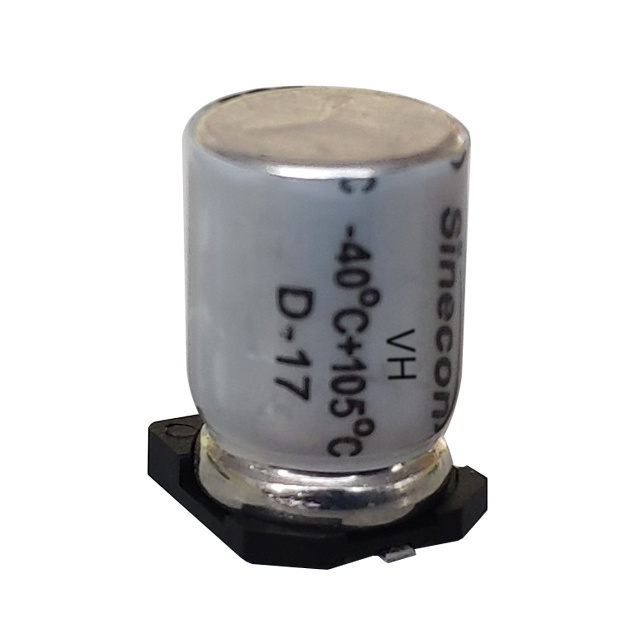
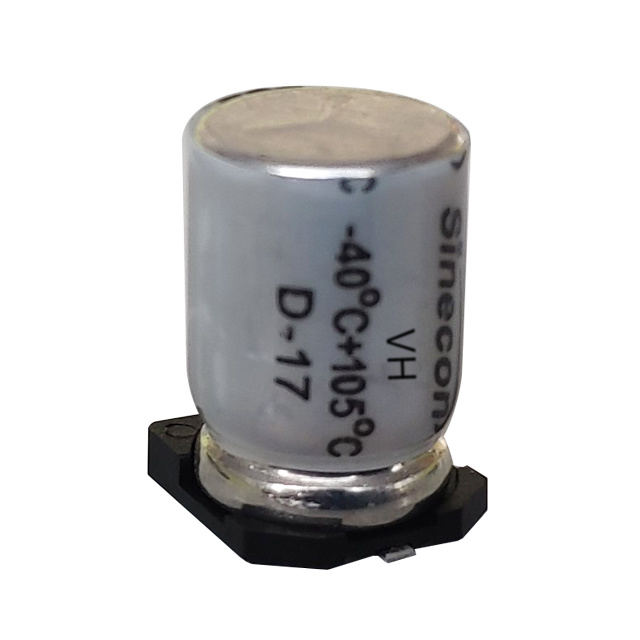 VH Small-Sized SMD Aluminum Electrolytic CapacitorThis compact capacitor's dark stripe marks the negative terminal, matching the hatched pad convention described earlier. Check it for reliable polarity identification in space-constrained designs.View Product →
Tantalum: the anode gets the stripe
Tantalum chips use the opposite language. The body is yellow, orange, or dark gray, and the stripe at one end marks positive, sometimes with a printed '+'. The habit of reading the value code with the positive end on the left is not reliable across manufacturers. The stripe is the rule.
Solid polymer SMD: one part, two conventions
Solid polymer SMD capacitors borrow from both conventions. Some darken the negative end; others band the positive end as tantalum does. There is no universal standard, so check the datasheet. Because every unit on a reel shares one marking convention, a single first-article check is powerful.
When the Capacitor Has No Marking at All
The most common version of this question is a small, tan, unmarked chip. It is almost always an MLCC, and it can be placed in either direction. Do not hunt for a polarity line that does not exist.
The dangerous cases are unmarked or poorly marked electrolytic types. Salvaged parts may have a scratched top; counterfeit tantalum sometimes carries the wrong stripe; cheap SMD aluminum parts occasionally have a weak coating that hides the dark half. If a polarized part has an ambiguous marking, treat it as unusable. One bad batch costs far less than a re-spin.
- Ask whether the part family is polarized before asking which end is which.
- Tantalum and aluminum electrolytic are always polarized; MLCC and film are not.
- If the marking is illegible, discard the part instead of guessing.
- Verify the first piece from a new reel against the datasheet drawing.
Verifying Polarity at the Bench
When the marking is clear, read it twice. When it is not, the PCB gives the next strongest clue: most footprints include a '+' near the positive pad or a hatched region near the negative pad. The footprint is part of the component, not decoration.
For an unknown electrolytic, an LCR meter with bias, or a component analyzer that charges the capacitor and compares leakage in both orientations, can determine polarity without destructive voltage. Reverse-biased aluminum oxide leaks far more than forward-biased. If the instrument cannot resolve it, escalate to a known-good part, not higher voltage.
- Check the top-surface marking and side stripe together.
- Confirm with the PCB silkscreen, not memory.
- Use an instrument that applies a small bias and measures leakage; if the result is ambiguous, replace the part.
Failures From an Inverted Placement
The visible failure modes of SMD aluminum electrolytic capacitors are well documented: vent lines open, the can swells, electrolyte weeps, ESR rises, capacitance falls. Tantalum adds a darker chapter — a shorted chip can ignite. We covered the full catalog in our analysis of the most common failure modes for chip-type aluminum electrolytic capacitors.
The production line never sees the capacitor the way you do on the bench. In a placement machine, the top marking is the entire vocabulary between a correctly oriented part and a field failure.— Reliability engineer, power electronics
For circuits with the highest reversal risk, solid polymer SMD capacitors can be a more forgiving choice. They still fail when reversed, but typically with a gradual rise in ESR rather than the violent short of tantalum.
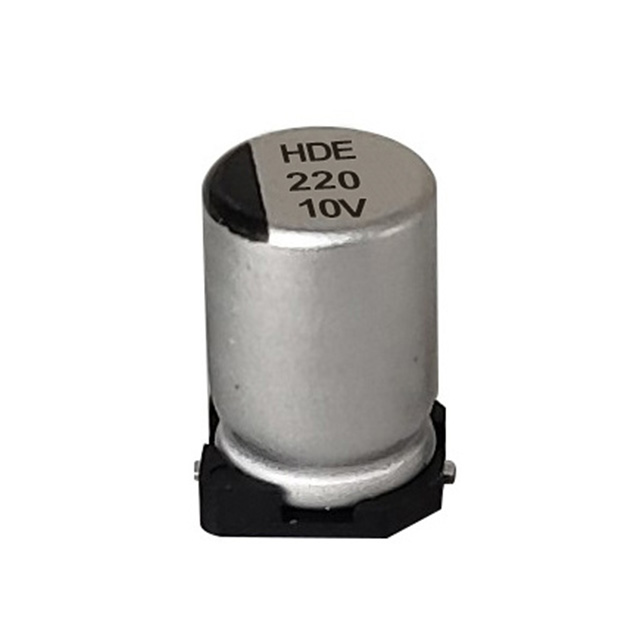 HDE Low ESR Polymer Capacitor for High RippleThis polymer capacitor offers gradual ESR rise on reversal, making it more forgiving than tantalum. Its high-contrast markings support fast, accurate optical inspection on placement lines.View Product →
Choosing Parts With Obvious Polarity
Legibility is a design feature. On a pick-and-place line, the top surface is the only information the optical system has at speed. High-contrast markings, consistent band width, and a clean boundary between bright and dark sectors reduce inverted placements. That is why at Nantong Xingchen, marking quality is treated as part of the specification rather than an afterthought.
When space is tight and the part sits beside a heatsink, a smaller case helps only if the marking remains readable. The VM series keeps its polarity band legible while operating at high temperature and high frequency — the combination found around switching-stage outputs. A part that can be read quickly is a part that gets placed correctly.
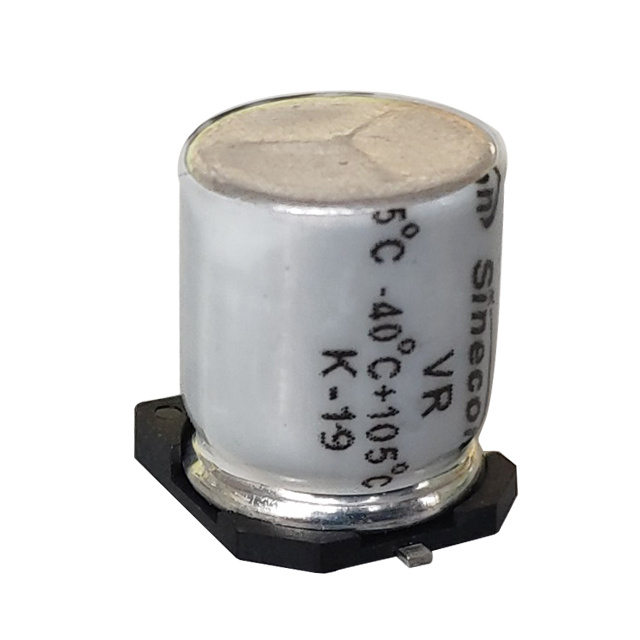
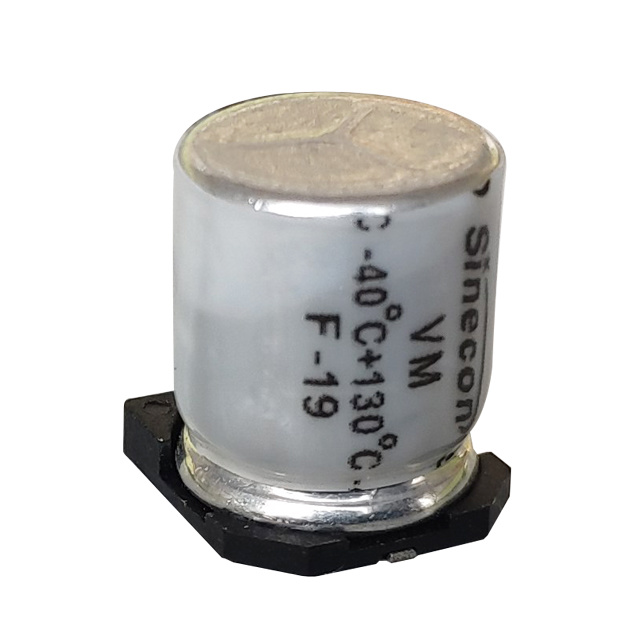 VM High-Temperature High-Frequency SMD CapacitorThis compact capacitor maintains a legible polarity band despite high-temperature and high-frequency operation, ideal near heatsinks where readability ensures correct placement in dense layouts.View Product →
Do not underestimate the value of a consistent reel. When every part follows the same marking convention, the first-article inspection covers the next several thousand placements. Store reels with the top side up, and document each family's convention in your component library.
Polymer parts follow the same logic: low-ESR polymer chips are increasingly used for output decoupling, and their marking standard appears on the series drawing.
Polarity Discipline in One Page
Polarity mistakes cluster at four moments: first-article bring-up, prototype hand assembly, rework after a failed test, and substitution from the bin. A short routine removes most of them.
- Identify the family first — ceramic, tantalum, aluminum electrolytic, or polymer.
- Locate the marking convention for that family, not for capacitors in general.
- Confirm the orientation on the PCB silkscreen before soldering.
- Verify the first part from a new reel against the datasheet, and reject ambiguous markings.
SMD capacitor polarity is not a mystery for a magnifying glass. It is a small, consistent visual language written by manufacturers who know that misreading it is the difference between a decade of service and a week. Read the cap like a battery label, and the board will thank you.