 English
 русский
 Tiếng Việt
 Español

Common Failure Modes of Chip Type Aluminium Solid Capacitors
-
Open-Circuit Failures
Open-circuit failure occurs when the electrical pathway through the capacitor is interrupted, preventing current flow. In Chip Type Aluminium Solid Capacitors, this can result from mechanical damage during handling, excessive board flex, thermal cycling, or solder joint defects. Open-circuit capacitors lose their ability to store and release energy, rendering filtering, decoupling, or timing circuits ineffective. In high-frequency power electronics, open-circuit failures can result in excessive voltage ripple, instability in DC-DC converters, or transient voltage spikes, potentially impacting downstream components. -
Short-Circuit Failures
Although relatively uncommon in solid aluminium capacitors, short circuits can occur due to dielectric breakdown, internal manufacturing defects, or overstress from voltage spikes. Short-circuit failure allows uncontrolled current to flow, which can lead to component overheating, PCB trace damage, and potential system-level failures. This mode is especially critical in densely packed electronics or high-current applications, where a single shorted capacitor can compromise an entire module. -
ESR (Equivalent Series Resistance) Drift or Increase
One of the defining characteristics of solid aluminium capacitors is their low ESR, which ensures high efficiency in filtering and power delivery applications. Over time, thermal stress, high ripple currents, or chemical degradation can lead to gradual ESR increase, reducing the capacitor’s ability to suppress voltage ripple effectively. An elevated ESR can cause localized heating, increased power loss, and performance degradation in switching regulators or audio circuits, making early detection and monitoring crucial for long-term reliability. -
Capacitance Degradation
Capacitance loss occurs when the dielectric material within the capacitor degrades due to aging, high operating temperatures, or prolonged exposure to voltage stress. Reduced capacitance can compromise power supply stability, timing accuracy, or filter performance, particularly in sensitive analog or digital circuits. Gradual loss of capacitance may not trigger immediate failure but can cumulatively impact circuit performance and reliability. -
Leakage Current Increase
While solid aluminium capacitors are designed for minimal leakage, high-temperature environments, overvoltage conditions, or mechanical stress can increase leakage current. Elevated leakage can lead to higher standby currents, reduced energy efficiency, false triggering in sensitive logic circuits, or accelerated dielectric degradation. This failure mode is especially relevant in low-power or battery-operated devices, where efficiency and standby power are critical. -
Mechanical or Solder Joint Failures
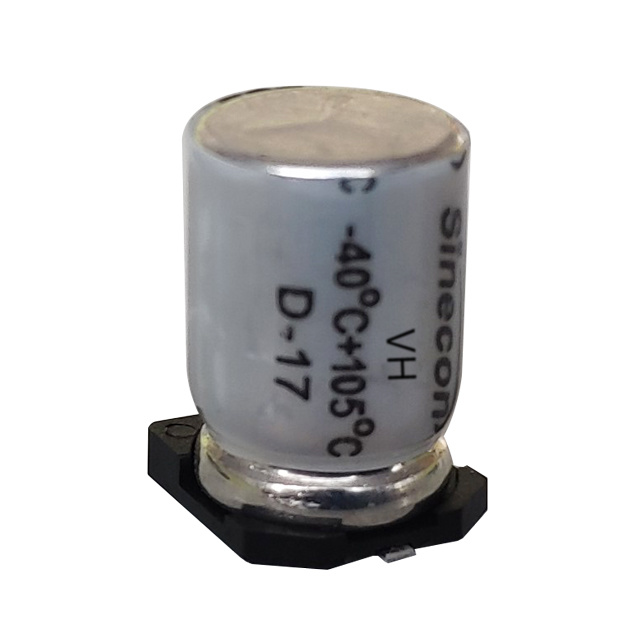
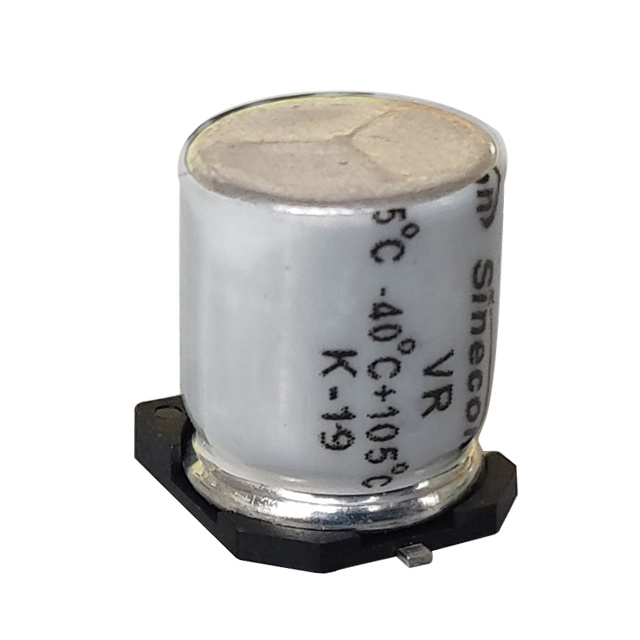
As surface-mount components, Chip Type Aluminium Solid Capacitors are susceptible to mechanical stress, PCB flex, or improper soldering during assembly. Cracked solder joints or fractured capacitor bodies can cause intermittent operation, open-circuit conditions, or complete failure. Mechanical failures are often exacerbated by thermal cycling, vibration, or uneven PCB surfaces, which impose stress on the component body and leads.
Detection Strategies
-
ESR and Capacitance Monitoring
Regular measurement of ESR and capacitance provides early warning of degradation. Designers can implement test points for in-circuit monitoring or use periodic bench testing to track gradual ESR rise or capacitance loss, identifying potential failures before catastrophic events occur. -
Thermal Imaging and Temperature Monitoring
Excessive heat can accelerate degradation and ESR drift. Thermal cameras or integrated temperature sensors can detect localized hotspots caused by high ripple currents or aging capacitors, allowing proactive maintenance or component replacement. -
Automated In-Circuit Testing (ICT)
During production or maintenance, ICT systems can check key parameters such as capacitance, ESR, and leakage current. Early identification of deviations from specifications ensures that defective components are detected before deployment. -
Visual Inspection
High-magnification inspection tools can identify cracked solder joints, lifted pads, or damaged capacitor bodies, which may indicate mechanical stress or improper reflow processes. Regular visual checks during assembly and after thermal cycling tests can prevent mechanical failures in service.
Mitigation Strategies in Circuit Design
-
Voltage and Temperature Derating
Derating involves operating the capacitor below its maximum rated voltage and temperature, which reduces electrical and thermal stress. For example, using a 16V-rated capacitor in a 12V circuit improves reliability and extends operational life. -
Parallel or Redundant Capacitor Networks
In critical applications, placing capacitors in parallel distributes current and reduces individual stress, lowering ESR contribution and providing redundancy in case of single-capacitor degradation. This is especially effective in high-ripple current or high-frequency circuits. -
Thermal Management
Optimized PCB layout, adequate airflow, heatsinking, or thermal vias around the capacitor reduces operating temperature, minimizing ESR drift and capacitance loss over time. Thermal management is particularly crucial in power electronics and automotive applications.