 English
 русский
 Tiếng Việt
 Español

An engineer once called us with a simple question: why do two capacitors with the same voltage and capacitance rating behave so differently in a power supply? The answer was in their electrolyte. In an aluminum electrolytic capacitor, the electrolyte is not a side detail — it is the working material that enables high capacitance, controls internal resistance, shapes temperature behavior and largely determines how long the part will last.
What an Electrolyte Does Inside the Capacitor
An aluminum electrolytic capacitor is built around a high-purity aluminum anode foil whose surface has been electrochemically etched to enlarge its effective area by orders of magnitude. That etched surface is then anodized to form a thin aluminum oxide layer that serves as the dielectric. The electrolyte permeates the etched tunnels of the foil and contacts the oxide over its entire real surface area. It is the true cathode of the capacitor: ions in the electrolyte complete the circuit to the cathode foil while the oxide barrier prevents direct electron flow.
Because the dielectric is extremely thin and the effective area is huge, a wet aluminum electrolytic capacitor achieves far higher capacitance per unit volume than film or ceramic types that rely on thicker dielectrics or smaller effective area. Without the electrolyte, the capacitor is just a piece of etched foil with a fragile oxide skin.
The electrolyte also provides self-healing. When a defect in the oxide layer allows a small local current, the oxygen-containing electrolyte re-oxidizes the damaged spot and restores the barrier. This self-repair mechanism is what lets aluminum electrolytics survive brief overvoltage events and internal dielectric weak points.
Three Families of Electrolyte Systems
The main classes of electrolyte used in production today are liquid (non-solid) systems, gel systems, and solid polymer systems. Each one changes the trade-offs between ESR, voltage capability, temperature range, lifetime and cost.
| Property | Liquid (Non-Solid) | Gel | Solid Polymer |
|---|---|---|---|
| Conduction type | Ionic | Ionic | Electronic |
| Relative conductivity | Low to medium | Medium | Much higher |
| Typical ESR at 20 °C | Medium to high | Medium | Very low |
| Voltage ceiling | High (400–600 V possible) | High | Lower (usually up to ~100 V) |
| Lifetime mechanism | Solvent evaporation and drying | Slower evaporation | No drying; thermal oxidation limits |
| Self-healing ability | Excellent | Good | Limited |
| Low-temperature behavior | Depends on solvent blend | Better than liquid in many cases | Good |
| Relative cost | Low | Medium | Higher |
Liquid electrolytes are the workhorse for high-voltage industrial, inverter and lighting applications where the capacitor must withstand high voltages and the self-healing mechanism provides protection against transient stress. Gel electrolytes sit between liquid and polymer, often used to extend life in compact designs. Solid polymer electrolytes, which conduct electrons through an organic semiconductor like PEDOT, eliminate the drying failure mode completely and deliver very low ESR.
How the Electrolyte Sets Your Key Performance Parameters
ESR and ripple current
Equivalent series resistance comes directly from the ionic conductivity of the electrolyte and the resistance of the foil connections. In a liquid electrolyte, ion mobility drops as temperature falls, so ESR rises sharply at -20 °C or -40 °C. Polymer electrolytes have a much smaller temperature swing. This is why designers who measure ripple heating at high ambient temperature or need stable impedance at low temperature look closely at the ESR curve. If you are exploring how different chemistries behave under high ripple stress, it helps to check how equivalent series resistance develops in aluminum electrolytic capacitors.
Temperature range and cold start
The freezing point of a liquid electrolyte is controlled by the solvent blend. Ethylene glycol-based chemistries with special additives allow operation down to -40 °C or lower. Capacitors using such formulations are marketed as cold-startable: they keep enough ion mobility that the capacitor charges quickly and ESR stays within specification. For outdoor telecom power, wind turbine controls and EV charging equipment in cold climates, this is not an optional feature.
Lifetime and the 10-degree rule
The familiar lifetime rule — every 10 °C reduction in core temperature roughly doubles lifetime — is not about the dielectric; it is about electrolyte evaporation. In a liquid capacitor, solvent gradually escapes through the rubber seal. Once the electrolyte dries out, capacitance drops, ESR climbs, and the part fails. Longer-life designs lower the dry-out rate by using lower-volatility solvents, better sealants, and sometimes gel chemistry. High-ripple designs add to core heating, so the same electrolyte can have a much shorter life in a poorly derated application.
Voltage stress and leakage current
Electrolyte conductivity and chemical purity also affect leakage current through the oxide. Impurities or water content can react with the oxide and raise leakage, especially at high temperature. Precision manufacturers control this by refining the electrolyte formulation and by aging the capacitors under voltage before shipment.
What This Means for Capacitor Selection
Start with the application stress, then pick the electrolyte system that handles it honestly.
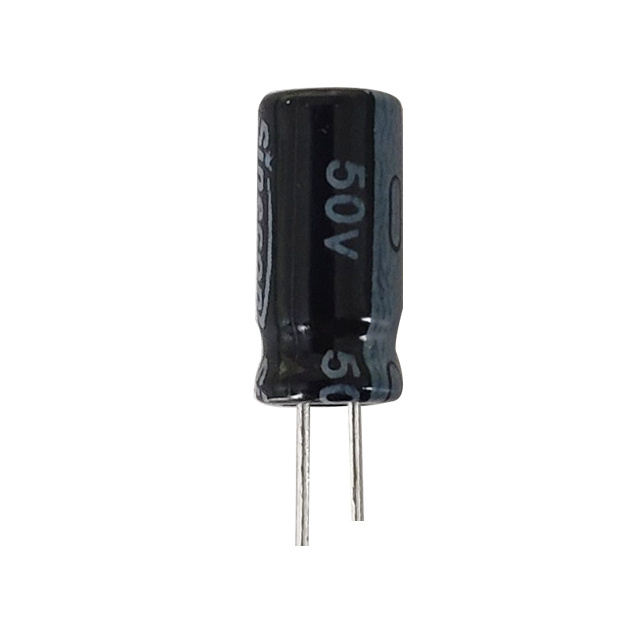
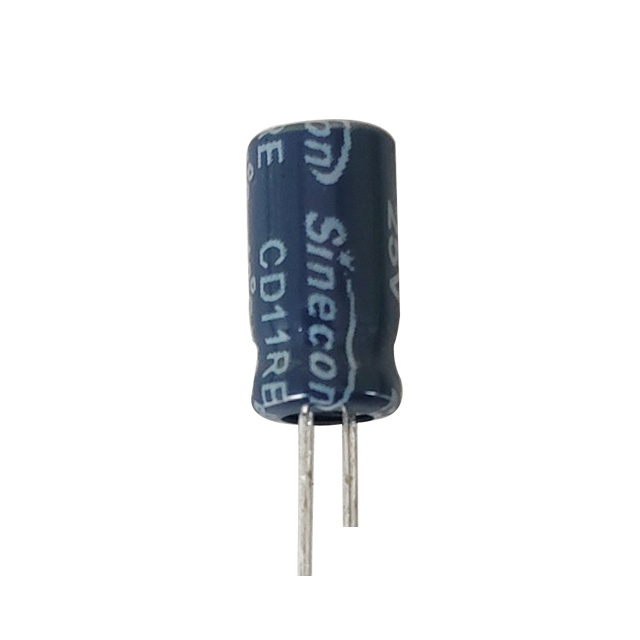
Cold climates: an outdoor charger or telecom rectifier may see -35 °C start-up. A standard liquid electrolyte capacitor may not charge properly at that temperature. The CD11GE low-temperature-startable radial series was developed for exactly this pattern, combining a low-temperature electrolyte with high-frequency and low-resistance performance. It makes the capacitor usable in the parts of the specification sheet that matter in winter.
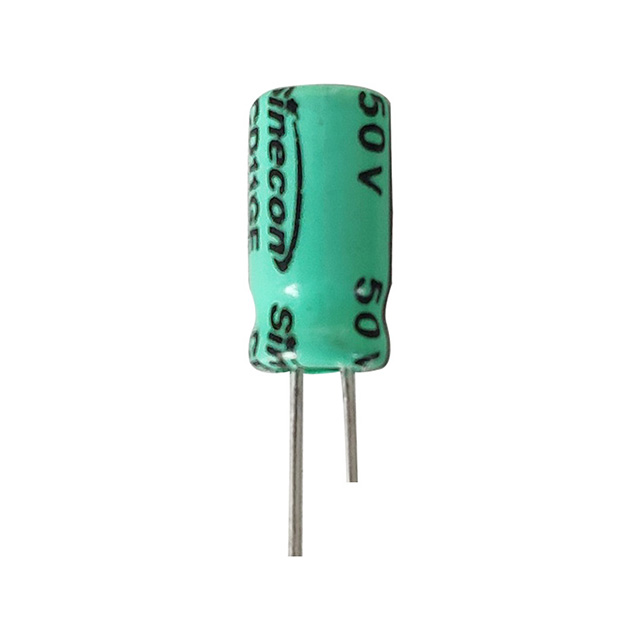 CD11GE Low-Temperature Startable High-Frequency Low-Resistance Low Voltage RadiaNantong Xingchen Electron Co., Ltd. is China Wholesale CD11GE Low-Temperature Startable High-Frequency Low-Resistance Low Voltage Radial ...View Product →
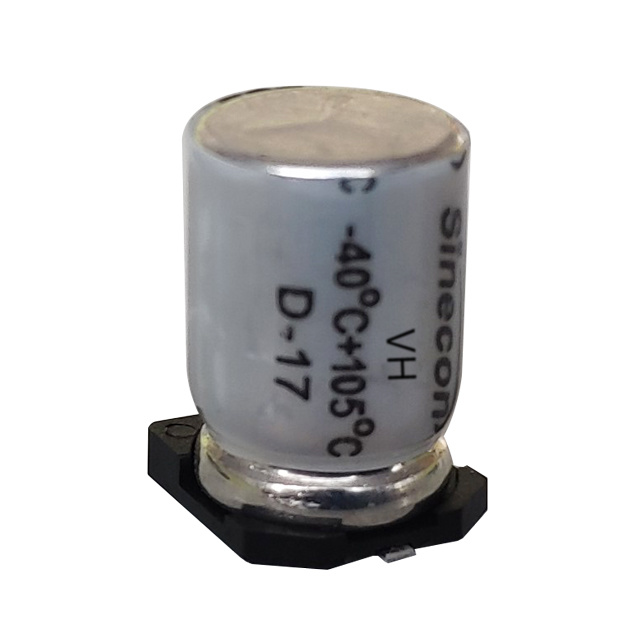
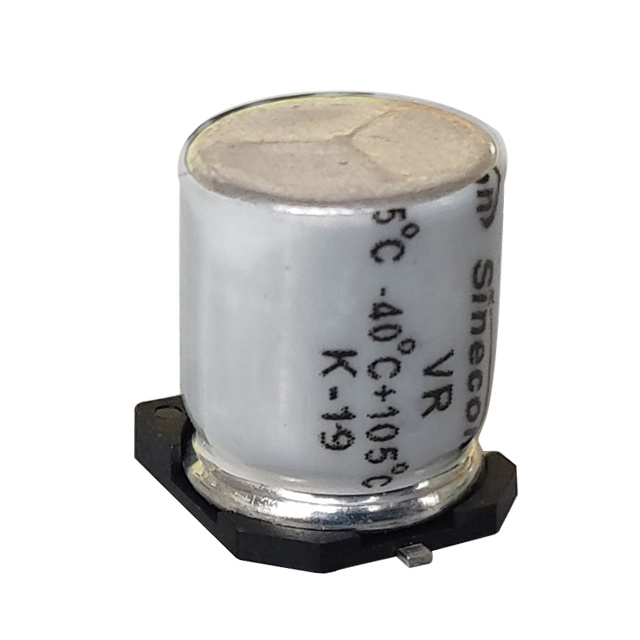
High ripple with limited board space: for server, 5G and DC/DC converter outputs where board space is tight and ripple current is high, a HDE compact surface-mount polymer series with its low ESR and high ripple rating can often replace a much larger liquid aluminum capacitor and improve reliability by removing the solvent drying mechanism.
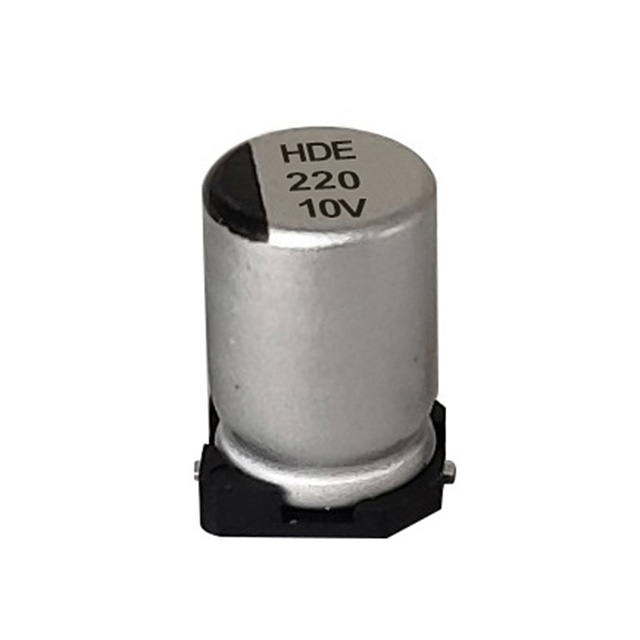 HDE Small-Sized, Low ESR, High Ripple Surface Mount Polymer Aluminum ElectrolytiNantong Xingchen Electron Co., Ltd. is China Wholesale HDE Small-Sized, Low ESR, High Ripple Surface Mount Polymer Aluminum Electrolytic ...View Product →
High-voltage bus: photovoltaic inverters and charging piles need to hold hundreds of volts with enough margin. The CD11H ultra-high-voltage long-life series uses a high-voltage liquid electrolyte system while keeping long-life design rules in mind. It is an example of how a well-formed electrolyte can serve a high-voltage bus without sacrificing ripple capability.
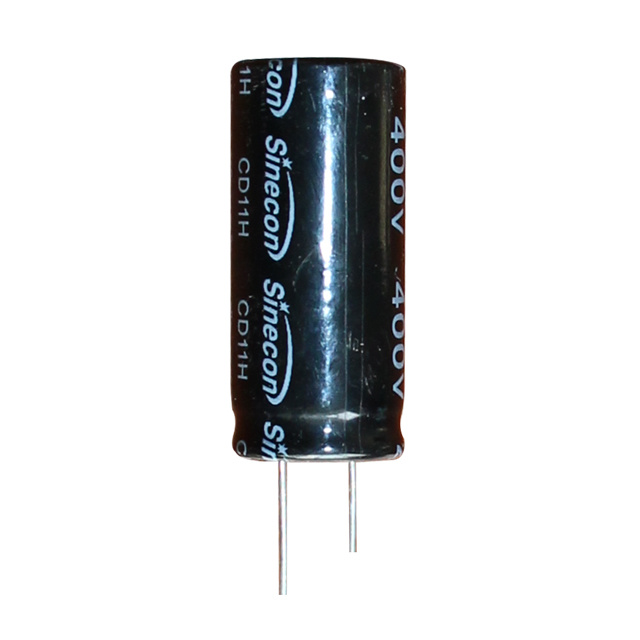 CD11H Ultra-High Voltage Long-Life Radial Aluminum Electrolytic Capacitor SuppliNantong Xingchen Electron Co., Ltd. is China Wholesale CD11H Ultra-High Voltage Long-Life Radial Aluminum Electrolytic Capacitor Supplier...View Product →
Whatever series you pick, verify the actual ESR versus temperature curve, the ripple current derating factor for your ambient temperature, and the vendor's lifetime model. Capacitance and voltage are the easy part of the selection; the electrolyte is where the data sheet gets honest.
Sourcing and Quality Considerations
Consistency matters because electrolyte handling is a production issue, not just a design issue. The same foil and oxide can perform differently if the electrolyte fill process allows air bubbles, if the formulation drifts between batches, or if the impregnation does not fully reach the etched tunnels. A capacitor plant needs precise dosing, controlled aging and real production testing to make sure the electrolyte inside every part meets the same specification. As a manufacturer that has been producing aluminum electrolytic capacitors since 1985, we run automated production lines and use MES, ERP and WMS systems so every batch can be traced and verified. When you audit a supplier, ask how they dispense and impregnate the electrolyte, how they control water content, and what tests they perform after aging. These details determine long-term field reliability far more than the label on the box.
Storage also interacts with the electrolyte. A capacitor that sits on a shelf for years can lose electrolyte through the seal before it is ever used. Recommended storage is typically two to three years; longer storage should be followed by a reform or aging test to restore the oxide. This is a practical point that buyers often miss when comparing prices.
Electrolyte is the reason the aluminum electrolytic capacitor exists. It is the component that makes high capacitance density possible, the material that controls ESR and temperature behavior, and the first thing to degrade in normal wear-out. Approach selection from the electrolyte side — define your operating temperature, ripple stress, voltage and lifetime requirement, then map those requirements to a series that has been designed to survive them. That habit will save you more field failures than any other single step in capacitor selection.