 English
 русский
 Tiếng Việt
 Español

In switching power supply decoupling applications, ceramic Surface Mount Capacitors offer significantly lower ESR than tantalum types — often by a factor of 10x to 100x. A typical multilayer ceramic SMD Capacitor in an 0805 package delivers ESR values as low as 1–10 mΩ, while a standard tantalum Surface Mount Capacitor in a similar capacitance range typically exhibits ESR values between 100–500 mΩ. This fundamental difference shapes how each type performs in high-frequency decoupling, output ripple suppression, and transient response scenarios.
Understanding this ESR gap — and knowing when it matters — is critical for engineers designing stable, efficient power rails in modern electronics.
What ESR Means in a Decoupling Context
ESR, or Equivalent Series Resistance, is the resistive component of a capacitor's impedance. In a switching power supply, the decoupling capacitor must absorb rapid current transients and suppress high-frequency noise generated by the switching action — typically occurring at frequencies from 100 kHz to several MHz. A low ESR allows the capacitor to respond quickly, sourcing or sinking current with minimal resistive voltage drop.
A high ESR, on the other hand, causes two problems: it increases the output voltage ripple (V = I × ESR), and it generates heat under high ripple current conditions, shortening the component's lifespan. For this reason, ESR is not just an academic parameter — it directly determines power rail stability and thermal reliability.
ESR Performance of Ceramic Surface Mount Capacitors
Multilayer ceramic capacitors (MLCCs) in SMD form are the dominant choice for high-frequency decoupling. Their construction — alternating layers of ceramic dielectric and metal electrodes — results in extremely low parasitic resistance and inductance.
Key ESR Characteristics
- ESR range: 1–30 mΩ depending on package size, capacitance value, and dielectric type
- C0G (NP0) dielectrics tend to have the lowest and most stable ESR across temperature
- X7R dielectrics offer higher capacitance density with ESR slightly higher than C0G, but still well under 50 mΩ
- Self-resonant frequency (SRF) is typically in the range of 10–500 MHz, making them effective well into the RF range
- No polarity restriction — suitable for AC and DC decoupling
A 100 nF X7R ceramic Surface Mount Capacitor in a 0402 package, for example, typically shows an ESR below 5 mΩ at 1 MHz — making it nearly ideal for point-of-load decoupling on a digital processor rail.
ESR Performance of Tantalum Surface Mount Capacitors
Tantalum Surface Mount Capacitors use a sintered tantalum powder anode with a solid manganese dioxide or polymer cathode. Their construction inherently introduces more resistive loss than ceramic types, but they offer much higher volumetric capacitance — making them useful for bulk energy storage at lower switching frequencies.
Key ESR Characteristics
- Standard MnO₂ tantalum: ESR typically 100–500 mΩ
- Polymer tantalum (POSCAP / SP-Cap): ESR reduced to 5–50 mΩ, bridging the gap with ceramics
- SRF is much lower than ceramics — typically 1–10 MHz — limiting high-frequency effectiveness
- Capacitance values up to 1000 µF are achievable in compact SMD packages
- Polarity-sensitive — incorrect reverse voltage can lead to catastrophic failure
Polymer tantalum variants have narrowed the ESR disadvantage considerably. For instance, a 100 µF polymer tantalum SMD Capacitor in a D-case package may exhibit ESR as low as 15 mΩ — approaching the performance of stacked ceramic arrays at equivalent capacitance values.
Head-to-Head ESR Comparison Table
| Parameter | Ceramic MLCC (SMD) | Tantalum MnO₂ (SMD) | Polymer Tantalum (SMD) |
|---|---|---|---|
| Typical ESR | 1–30 mΩ | 100–500 mΩ | 5–50 mΩ |
| Capacitance Range | 1 pF – 100 µF | 100 nF – 1000 µF | 2.2 µF – 1000 µF |
| Self-Resonant Frequency | 10–500 MHz | 1–5 MHz | 2–10 MHz |
| Ripple Current Rating | Moderate | Low–Moderate | Moderate–High |
| Polarity Required | No | Yes | Yes |
| Voltage Derating Needed | Yes (DC bias effect) | Yes (50% rule) | Yes (10–20%) |
| Failure Mode | Open (safe) | Short (can ignite) | Short (less severe) |
How ESR Affects Ripple Voltage and Thermal Performance
The ripple voltage contributed by a decoupling capacitor's ESR follows the simple relationship: V_ripple = I_ripple × ESR. In a 2A ripple current environment — common in modern DC-DC converters — a tantalum capacitor with 300 mΩ ESR introduces 600 mV of resistive ripple, far exceeding what most digital ICs can tolerate. A ceramic SMD Capacitor with 5 mΩ ESR in the same circuit contributes only 10 mV.
The thermal consequence is equally significant. Power dissipated in the ESR equals I²× ESR. For the same 2A ripple current, a 300 mΩ tantalum unit dissipates 1.2 W — enough to raise component temperature significantly and degrade reliability. A 5 mΩ ceramic dissipates only 20 mW under the same conditions.
Where Tantalum Still Holds an Advantage
Despite their ESR disadvantage, tantalum Surface Mount Capacitors remain valuable in specific decoupling scenarios. Their high volumetric capacitance makes them excellent for bulk energy storage on power rails where large capacitance values — 47 µF to 470 µF — are needed in a compact SMD footprint.
Designers frequently combine both technologies: ceramic SMD Capacitors handle high-frequency noise suppression close to the IC, while tantalum units provide the bulk charge reservoir at the power input stage. This hybrid approach captures the ESR benefits of ceramics and the energy density of tantalums.
It is also worth noting that in some low-frequency designs — audio amplifiers, analog sensor power rails, or slow microcontroller systems — the slightly higher ESR of a tantalum SMD Capacitor can actually act as a natural damping element, preventing oscillation in certain LDO regulator topologies that require a minimum ESR to remain stable.
Comparing ESR Across All Common SMD Capacitor Technologies
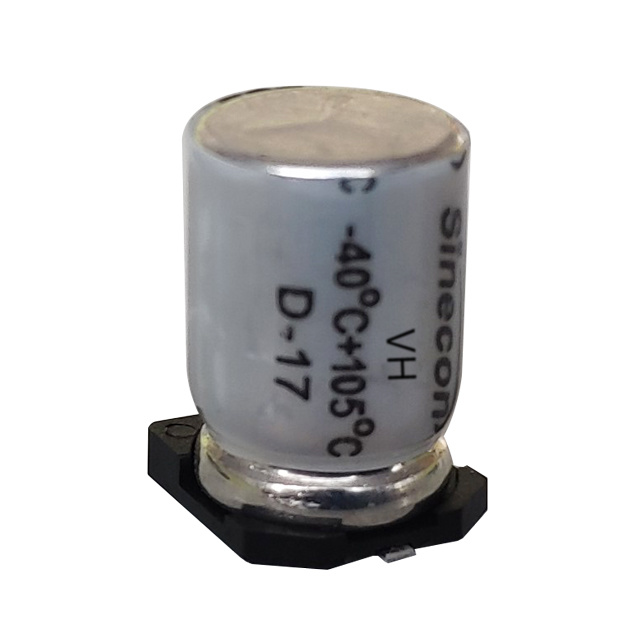
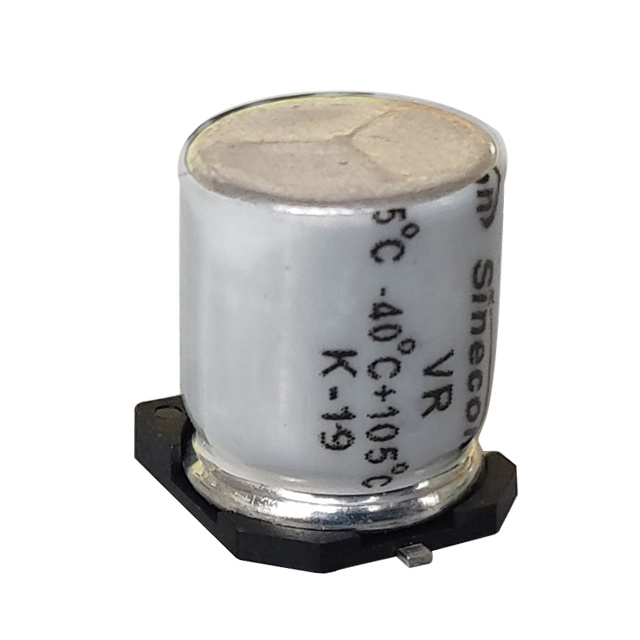
Beyond ceramic and tantalum, engineers working on switching power supplies should also consider the role of Surface Mount Devices Aluminum Electrolytic Capacitors in their designs. These aluminum electrolytic SMD types offer the highest capacitance per dollar — values up to 10,000 µF are achievable — but carry the highest ESR among SMD technologies, typically ranging from 200 mΩ to several ohms depending on package size and temperature.
Surface Mount Devices Aluminum Electrolytic Capacitors are most commonly used on the primary side of switching regulators or in low-frequency bulk storage where cost and capacitance volume dominate over ESR performance. Their ESR is also highly temperature-sensitive — at -40°C, ESR can increase by 5x to 10x compared to room temperature values, which is a critical consideration in automotive or industrial designs.
- Ceramic MLCC SMD Capacitors: Best ESR, best high-frequency performance, limited capacitance
- Polymer Tantalum SMD Capacitors: Good ESR, high capacitance density, moderate cost
- Standard Tantalum SMD Capacitors: Higher ESR, reliable, wide availability
- Surface Mount Devices Aluminum Electrolytic Capacitors: Highest ESR, highest capacitance, lowest cost per µF
Practical Selection Guidelines for Switching Power Supply Decoupling
When selecting Surface Mount Capacitors for decoupling in a switching power supply, the following guidelines help narrow the choice based on circuit requirements:
- For high-frequency decoupling (1 MHz and above): Always use ceramic MLCC SMD Capacitors with X7R or C0G dielectric in 0402 or 0603 packages. Place them as close to the IC power pins as possible.
- For mid-frequency bulk decoupling (100 kHz–1 MHz): Polymer tantalum SMD Capacitors offer a good balance of ESR and capacitance density. A 47–100 µF polymer tantalum paired with a 100 nF ceramic covers most digital rail requirements.
- For primary-side bulk storage: Surface Mount Devices Aluminum Electrolytic Capacitors are cost-effective for values above 100 µF where switching frequency is below 100 kHz.
- Apply voltage derating: For tantalum Surface Mount Capacitors, derate to 50% of rated voltage to ensure long-term reliability. Ceramic SMD Capacitors require derating to account for DC bias-induced capacitance loss — a 10V-rated X7R capacitor may lose up to 50% capacitance at 5V bias.
- Consider failure mode risk: In circuits where a shorted capacitor would cause a board-level failure, prefer ceramic SMD Capacitors, which typically fail open. Standard tantalum types can fail as a short circuit and, in severe cases, ignite.
The ESR difference between ceramic and tantalum Surface Mount Capacitors is not merely a datasheet footnote — it has direct, measurable consequences for ripple voltage, power dissipation, and system stability in switching power supplies. Ceramic SMD Capacitors are the clear winner for high-frequency decoupling, while tantalum types — particularly polymer variants — serve an important role in mid-range bulk decoupling. Surface Mount Devices Aluminum Electrolytic Capacitors round out the toolkit for high-capacitance, low-frequency applications.
In most modern power supply designs, the optimal strategy is not to choose one type exclusively, but to deploy each SMD Capacitor technology where its ESR profile, capacitance range, and frequency response align with the specific demands of that stage in the power delivery network.