 English
 русский
 Tiếng Việt
 Español

Direct Impact of ESR on Power Supply Performance
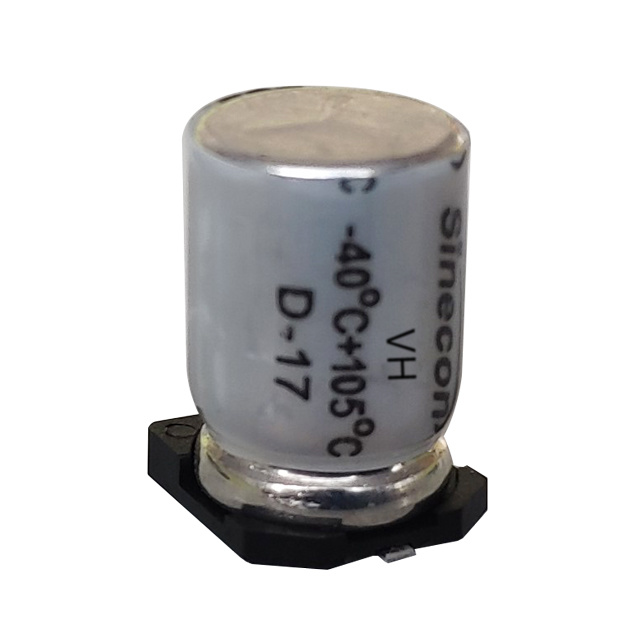
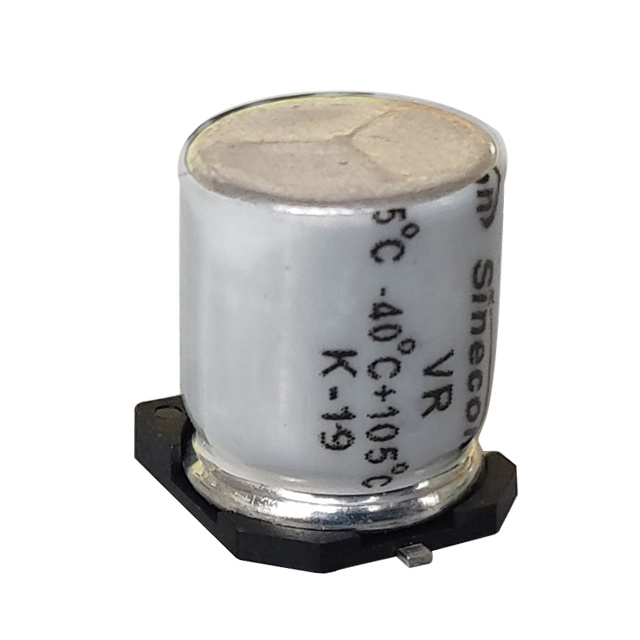
Equivalent Series Resistance (ESR) in SMD Capacitors directly influences ripple voltage, heat generation, efficiency, and stability of power supplies. In practical terms, lower ESR improves filtering performance, reduces power loss, and enhances transient response, while higher ESR can lead to increased ripple, thermal stress, and degraded regulation. Selecting SMD capacitors with appropriately low ESR is therefore critical for modern high-frequency and high-efficiency power designs.
Understanding ESR in SMD Capacitors
ESR represents the internal resistive component of a capacitor that behaves like a small resistor in series with the ideal capacitance. In SMD Capacitors, ESR is influenced by dielectric materials, electrode structure, and manufacturing processes. Even though capacitors are primarily reactive components, ESR introduces real power losses that become significant at high currents and switching frequencies.
For example, a ceramic SMD capacitor may have an ESR in the milliohm range (e.g., 5–20 mΩ), while tantalum or electrolytic SMD capacitors may exhibit ESR values ranging from 50 mΩ to several ohms, depending on type and rating.
Impact of ESR on Ripple Voltage
Ripple voltage in power supplies is strongly affected by ESR. When alternating current flows through the capacitor, ESR generates a voltage drop proportional to the ripple current.
Higher ESR results in higher ripple voltage. This can be approximated using:
Ripple Voltage ≈ Ripple Current × ESR
For instance, if a capacitor carries a ripple current of 1 A and has an ESR of 0.05 Ω, the ripple voltage contribution alone is 0.05 V (50 mV). Reducing ESR to 0.01 Ω lowers this contribution to 10 mV, significantly improving output stability.
Thermal Effects and Power Loss
ESR causes power dissipation in the form of heat within SMD Capacitors. The power loss can be calculated as:
Power Loss = (Ripple Current)² × ESR
For example, with a ripple current of 2 A and ESR of 0.02 Ω:
Power Loss = 2² × 0.02 = 0.08 W
Although this may seem small, in densely packed circuits, cumulative heating from multiple capacitors can raise local temperatures, potentially reducing lifespan or causing failure.
Efficiency Implications in Switching Power Supplies
In switching power supplies, ESR contributes to conduction losses that reduce overall efficiency. Low-ESR SMD Capacitors are preferred in output filtering stages to minimize wasted energy.
Reducing ESR can improve efficiency by 1–5% in high-performance designs, particularly in DC-DC converters where ripple currents are significant. This is especially important in battery-powered systems where energy efficiency directly impacts runtime.
Comparing ESR Across Capacitor Types
| Capacitor Type | Typical ESR | Performance Characteristics |
|---|---|---|
| Multilayer Ceramic (MLCC) | 5–20 mΩ | Excellent for high-frequency decoupling and low ripple |
| Tantalum | 50–500 mΩ | Stable capacitance, moderate ESR |
| Electrolytic (SMD) | 0.05–2 Ω | High capacitance but higher losses |
This comparison shows why MLCC SMD Capacitors are often preferred in high-frequency filtering applications due to their extremely low ESR.
ESR and Transient Response
Transient response refers to how quickly a power supply reacts to sudden load changes. ESR plays a key role in this behavior.
Lower ESR allows faster charge and discharge cycles, improving transient response. When a load suddenly increases, low-ESR SMD Capacitors can supply current more efficiently, reducing voltage dips and maintaining system stability.
Design Considerations for Engineers
Parallel Capacitor Configuration
Using multiple SMD Capacitors in parallel reduces overall ESR and improves current handling. For example, two identical capacitors in parallel can theoretically halve the ESR.
Frequency Selection
At higher frequencies, ESR becomes more dominant than capacitance in determining impedance. Selecting capacitors with low ESR ensures stable operation in switching regulators operating in the kHz to MHz range.
Thermal Management
Designers must consider thermal dissipation caused by ESR. Adequate PCB layout, copper area, and airflow help dissipate heat generated by power losses in SMD Capacitors.
Measurement and Validation of ESR
ESR can be measured using impedance analyzers, LCR meters, or specialized ESR meters. Measurements are typically performed at specific frequencies (e.g., 100 kHz) to reflect real operating conditions.
- Measure ESR at operating frequency rather than DC conditions
- Verify ESR under expected temperature ranges
- Compare measured values with manufacturer datasheets
Accurate ESR validation ensures that SMD Capacitors will perform reliably in real-world power supply environments.