 English
 русский
 Tiếng Việt
 Español

How a Solid Polymer Capacitor Behaves Under High Ripple Current
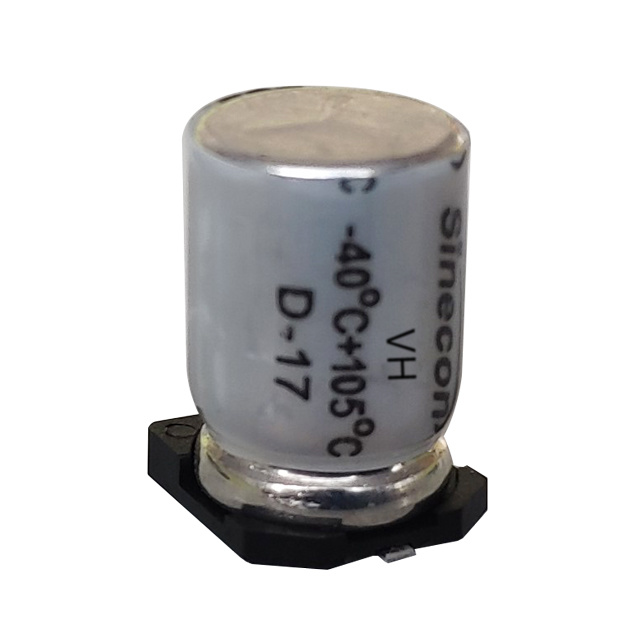
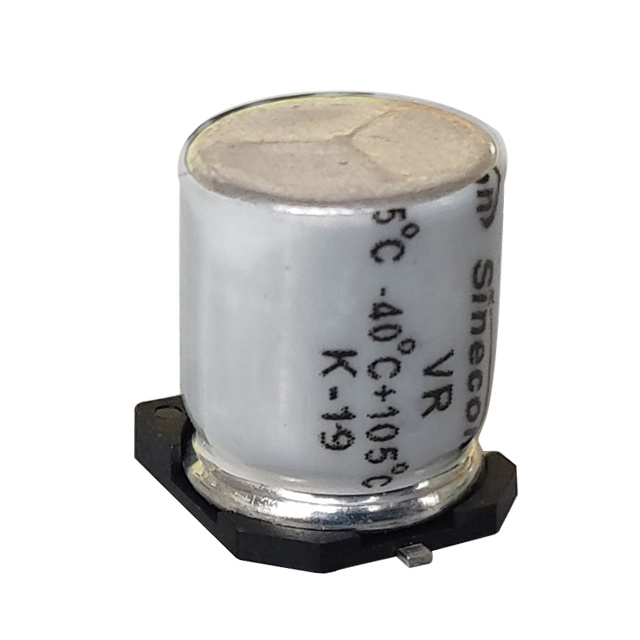
The Solid Polymer Capacitor performs exceptionally well under high ripple current conditions due to its very low Equivalent Series Resistance (ESR) and stable conductive polymer electrolyte. Compared with conventional aluminum electrolytic capacitors, a Solid Polymer Capacitor generates significantly less internal heat when exposed to ripple current, which allows it to maintain electrical stability and extend operational lifetime. In many switching power supply circuits, these capacitors can safely handle ripple currents that are 30%–200% higher than comparable electrolytic capacitors.
Because the polymer electrolyte has high electrical conductivity, ripple current flowing through capacitor produces less resistive heating. This characteristic helps prevent thermal degradation, voltage instability, and premature failure. As a result, Solid Polymer Capacitors are widely used in applications such as motherboard voltage regulation modules (VRMs), high-frequency DC-DC converters, industrial power supplies, and automotive electronic systems where ripple current levels can be very high.
Understanding Ripple Current in Power Electronics
Ripple current refers to the alternating component of current that flows through a capacitor in power conversion circuits. It is typically generated by switching regulators, inverters, or rectifiers. When ripple current passes through a capacitor, it interacts with the capacitor's internal resistance and produces heat according to the following principle:
Power Dissipation = I² × ESR
Where:
- I = Ripple current
- ESR = Equivalent Series Resistance
The lower the ESR, the less heat is generated inside the capacitor. Since a Solid Polymer Capacitor typically has ESR values as low as 5–20 milliohms, it can handle higher ripple currents without excessive temperature rise. In contrast, many aluminum electrolytic capacitors have ESR values ranging from 50–300 milliohms, making them more vulnerable to ripple-induced heating.
Why Solid Polymer Capacitors Handle High Ripple Current Efficiently
Low Equivalent Series Resistance
The most important advantage of a Solid Polymer Capacitor is its extremely low ESR. The conductive polymer used as the electrolyte offers much higher electrical conductivity than liquid electrolytes. This means that even under large AC current flow, internal power dissipation remains minimal.
Stable Thermal Performance
Solid Polymer Capacitors exhibit very stable ESR values across a wide temperature range. Even at temperatures as low as −55°C or as high as 105°C to 125°C, ESR remains relatively consistent. This stability allows them to sustain ripple current without dramatic thermal variations.
Reduced Internal Heating
Because heat generation is proportional to ESR, the low resistance of the polymer structure ensures that internal heating remains minimal even when ripple current is high. In many designs, the temperature rise of a Solid Polymer Capacitor under rated ripple current may remain below 10°C, which significantly improves reliability.
Typical Ripple Current Capability Compared with Other Capacitors
| Capacitor Type | Typical ESR Range | Ripple Current Capability | Temperature Stability |
|---|---|---|---|
| Solid Polymer Capacitor | 5–20 mΩ | Very High | Excellent |
| Aluminum Electrolytic Capacitor | 50–300 mΩ | Moderate | Moderate |
| Tantalum Capacitor | 30–100 mΩ | Medium | Good |
| MLCC | Very Low | High but limited capacitance | Excellent |
Real-World Applications with High Ripple Current
High ripple current conditions are common in modern electronics, particularly where switching regulators are used. Solid Polymer Capacitors are often selected in the following applications because of their superior ripple current tolerance.
- CPU voltage regulator modules on computer motherboards
- High-efficiency DC-DC converters
- Telecommunications power systems
- Automotive ECU power filtering circuits
- Industrial switching power supplies
For example, in a typical CPU VRM circuit switching at 300 kHz to 1 MHz, ripple currents may exceed 3–5 amperes per capacitor. Solid Polymer Capacitors are capable of maintaining stable capacitance and ESR under these conditions while minimizing voltage ripple.
Design Considerations for Using Solid Polymer Capacitors in High Ripple Circuits
Although Solid Polymer Capacitors perform very well under high ripple current, engineers should still follow good design practices to maximize reliability.
Select Proper Ripple Current Rating
Always ensure that the capacitor's ripple current rating exceeds the expected circuit ripple current. A common rule is to maintain at least 20–30% safety margin.
Consider Thermal Environment
Although Solid Polymer Capacitors produce less heat internally, external temperature still affects lifetime. If ambient temperatures exceed 85°C, additional cooling or spacing may be necessary.
Use Parallel Capacitors for Extreme Ripple
In very high current applications, designers often connect multiple capacitors in parallel. This approach distributes ripple current across several components, further reducing temperature rise and improving system reliability.
Reliability and Lifetime Under High Ripple Current
The lifetime of a Solid Polymer Capacitor under ripple current stress is generally much longer than that of traditional electrolytic capacitors. Because polymer electrolytes do not evaporate like liquid electrolytes, the capacitor does not experience gradual drying.
Typical lifetime ratings for Solid Polymer Capacitors can reach 5,000 to 20,000 hours at 105°C. When operating at lower temperatures, the effective lifetime can increase dramatically according to the Arrhenius rule, often exceeding 100,000 hours in practical applications.
This durability makes Solid Polymer Capacitors highly suitable for mission-critical electronics, including industrial automation systems, telecommunications infrastructure, and high-performance computing hardware.