 English
 русский
 Tiếng Việt
 Español

Layout Considerations
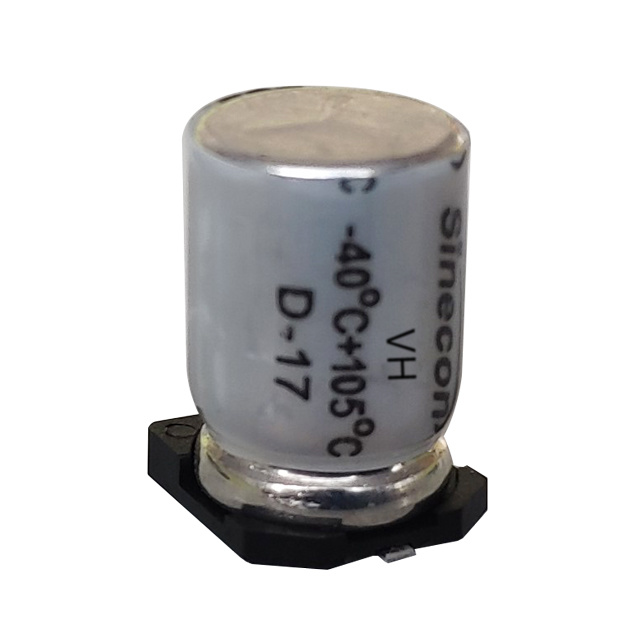
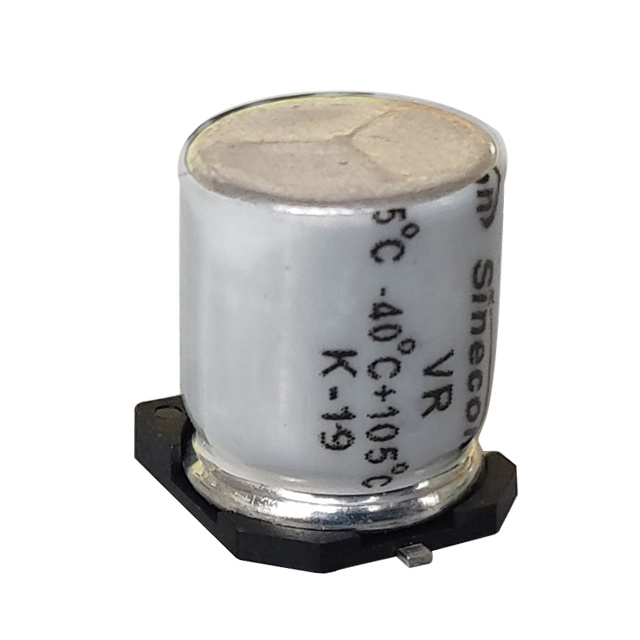
The compact size of Surface Mount Capacitors plays a significant role in the layout of a printed circuit board (PCB). Their small footprint allows designers to place more components within the same area, facilitating more efficient use of space. This feature is particularly valuable in applications where size constraints are critical, such as in consumer electronics, wearable devices, or compact circuit assemblies. However, careful planning is required to avoid overcrowding, as excessive component density can lead to issues like signal interference or difficulty in routing. The positioning of Surface Mount Capacitors needs to be strategically considered, particularly for components involved in power delivery or filtering applications. Their placement should ensure minimal trace lengths to reduce inductance and resistance, and to optimize the capacitor's ability to perform its intended function, whether that is for decoupling, filtering, or energy storage.
Component Placement and Proximity
One of the defining characteristics of Surface Mount Capacitors is their ability to be placed directly on the surface of the PCB, as opposed to through-hole components which require drilled holes. This enables high-density designs and places fewer constraints on component placement. In most designs, capacitors are strategically placed near components they support, such as placing decoupling capacitors close to power pins of ICs to help stabilize the power supply and reduce noise. The proximity of Surface Mount Capacitors to their respective components plays a critical role in performance. The shorter the distance between the capacitor and the power or signal source, the more effective it will be at filtering out noise and stabilizing voltage, especially in high-frequency applications. However, component proximity also requires careful attention to avoid heat-sensitive components being placed near areas of high thermal dissipation.
Routing Challenges
Routing becomes more challenging when working with Surface Mount Capacitors, especially in high-speed or high-frequency circuits. Due to their small size and the need for short, direct connections, routing traces must be designed with precision. Longer traces can introduce parasitic inductance, which in turn affects the capacitance and performance of the capacitor, especially at higher frequencies. The current handling capacity of traces needs to be considered, as wider traces are required for high-current applications. Ensuring that traces are kept as short and direct as possible while minimizing resistance is critical in maintaining optimal performance. In high-speed circuits, signal integrity is crucial, and any additional inductance or resistance could degrade the signal. This requires precise calculation of trace widths, spacing, and the use of ground planes or vias to minimize noise and loss.
Assembly Process
The assembly process for Surface Mount Capacitors is one of the key benefits over traditional through-hole components. The automated assembly process, which often involves pick-and-place machines, allows capacitors to be placed with high precision on the PCB surface. This streamlined process reduces the need for manual handling and significantly decreases assembly time, leading to faster production cycles. It enables high-density designs that would be difficult or impossible with through-hole components, particularly in consumer electronics or small-scale devices. However, the precision required in component placement is critical, as misalignment can result in poor solder joints, which can impact electrical performance or lead to component failure. Reflow soldering, the most common method for surface mount assembly, requires careful temperature control to avoid issues like thermal stress or excessive heat exposure that could damage the components.
Soldering Techniques and Considerations
Surface Mount Capacitors are soldered using reflow soldering techniques, in which solder paste is applied to the PCB before components are placed. The PCB then passes through an oven where the solder paste is heated to its melting point, creating a reliable solder joint between the capacitor and the PCB. Since surface mount capacitors have smaller leads compared to through-hole components, ensuring proper paste application and solder flow is crucial for a robust connection. The process also requires controlling the thermal profile during the reflow process, as excessive heating can degrade the capacitor's dielectric material or affect its performance. Another important consideration is solder joint inspection. As these components are often used in high-precision electronics, having reliable and well-formed solder joints is critical. Inconsistent or poorly made solder joints can result in intermittent connections, leading to reduced performance or failure.