 English
 русский
 Tiếng Việt
 Español

Film capacitors significantly outperform radial electrolytic capacitors. Radial electrolytic capacitors are optimized for bulk capacitance, energy storage, and low-frequency filtering, but their internal construction introduces parasitic elements that limit their usefulness above a few kilohertz. Film capacitors, by contrast, maintain stable impedance and low loss well into the megahertz range. If your circuit operates above 10 kHz, a film capacitor is almost always the more reliable and efficient choice.
Why Radial Electrolytic Capacitors Struggle at High Frequencies
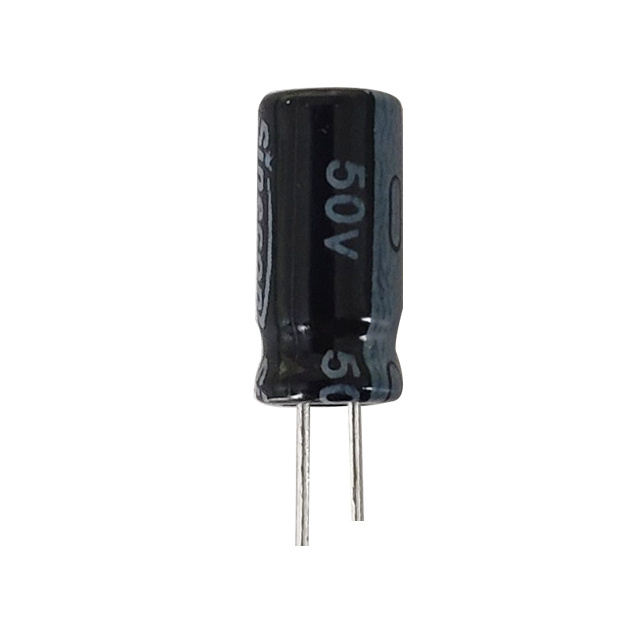
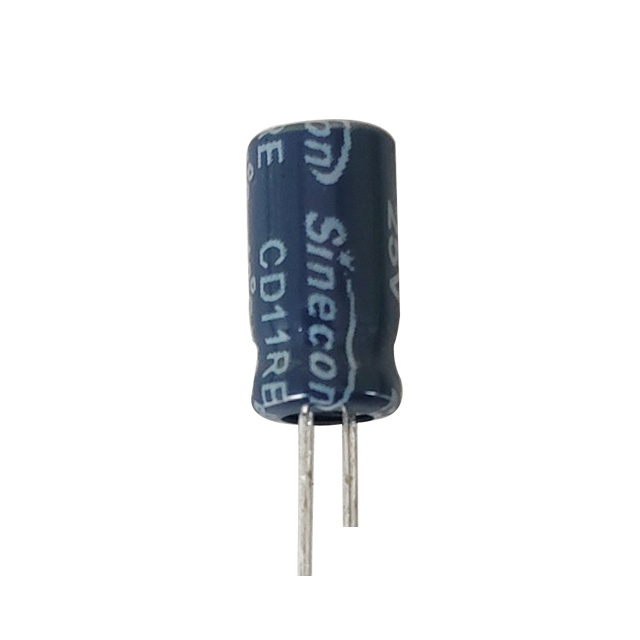
Radial electrolytic capacitors are constructed using a wound aluminum foil with a liquid or gel electrolyte. This construction introduces three major parasitic parameters that become problematic at high frequencies:
- ESR (Equivalent Series Resistance): Typically ranges from 0.1Ω to several ohms depending on the capacitor's size and rating. At high frequencies, ESR dominates the impedance and causes significant power dissipation.
- ESL (Equivalent Series Inductance): Usually in the range of 10–100 nH. Above the self-resonant frequency (SRF), the capacitor behaves inductively rather than capacitively, making it useless or even harmful in AC signal paths.
- Dielectric Loss: The liquid electrolyte has higher dielectric losses than plastic film materials, increasing the dissipation factor (tan δ) at elevated frequencies.
A standard 100µF/25V radial electrolytic capacitor may have a self-resonant frequency as low as 300–500 kHz. Beyond this point, its impedance rises and it can no longer effectively bypass or filter high-frequency signals.
How Film Capacitors Handle High-Frequency Signals
Film capacitors use a thin plastic dielectric — most commonly polyester (PET), polypropylene (PP), or polyphenylene sulfide (PPS) — wound or stacked between metal electrodes. This design results in:
- Very low ESR: Typically below 10 mΩ for polypropylene types, enabling efficient signal transfer with minimal heat generation.
- Low ESL: Stacked film capacitors can achieve ESL values below 5 nH, pushing the SRF well above 10 MHz for small values.
- Low dissipation factor: Polypropylene film capacitors can achieve tan δ values as low as 0.0001 at 1 kHz, compared to 0.1 or higher for electrolytic types.
- Stable capacitance over frequency: Film capacitors show less than 2% capacitance variation from 100 Hz to 100 kHz in most polypropylene types.
A 100nF polypropylene film capacitor, for example, can maintain effective capacitive behavior up to 5–10 MHz, making it well suited for RF filtering, audio crossover networks, and switching converter snubbers.
Direct Performance Comparison: Key Parameters
| Parameter | Radial Electrolytic Capacitor | Polypropylene Film Capacitor |
|---|---|---|
| Typical ESR | 0.1Ω – 5Ω | <10 mΩ |
| Typical ESL | 10 – 100 nH | 1 – 10 nH |
| Self-Resonant Frequency | 300 kHz – 1 MHz | 1 MHz – 30 MHz |
| Dissipation Factor (tan δ) | 0.05 – 0.20 | 0.0001 – 0.001 |
| Capacitance Stability vs. Frequency | Poor (degrades rapidly) | Excellent (<2% variation) |
| Polarization Required | Yes | No |
| Typical Capacitance Range | 1µF – 100,000µF | 1nF – 100µF |
| Cost per µF | Low | High |
Application-Specific Recommendations
Understanding where each capacitor type belongs helps engineers avoid costly design mistakes. Below are practical guidance scenarios:
Switching Power Supplies (SMPS)
In SMPS designs operating at 50–500 kHz, radial electrolytic capacitors are commonly used at the input and output bulk stages to hold charge between switching cycles. However, they are paired with ceramic or film capacitors in parallel to handle high-frequency ripple. A typical configuration places a 470µF radial electrolytic in parallel with a 100nF polypropylene film capacitor to cover both bulk and high-frequency filtering needs simultaneously.
Audio Amplifiers and Crossover Networks
In audio applications, radial electrolytic capacitors are acceptable for DC blocking in signal paths at low frequencies (below 1 kHz), but film capacitors are strongly preferred for crossover networks and coupling stages where phase accuracy and low distortion matter. Polypropylene film capacitors are the industry standard in high-fidelity crossovers because their dissipation factor is up to 200× lower than electrolytic types.
Motor Drive and Inverter Circuits
DC bus filtering in motor drives typically uses large radial electrolytic capacitors (1000µF–10,000µF) to stabilize the bus voltage. However, for snubber circuits across IGBT or MOSFET switches — where fast transients in the nanosecond range must be absorbed — film capacitors with low inductance are mandatory. Using a radial electrolytic capacitor as a snubber would be ineffective and potentially dangerous.
RF and Signal Processing
For any application above 1 MHz — including RF tuning, oscillators, and impedance matching — radial electrolytic capacitors are entirely unsuitable. Their inductive behavior above the SRF makes them counterproductive. Film capacitors, particularly mica or polypropylene types, are used here for their precision and stability.
Can Radial Electrolytic Capacitors Be Improved for Higher Frequencies?
Manufacturers have developed low-ESR and low-impedance variants of radial electrolytic capacitors to address some high-frequency limitations. These include:
- Low-ESR radial electrolytics: Designed for SMPS use, these can reduce ESR to below 30 mΩ, extending their useful frequency range closer to 1 MHz.
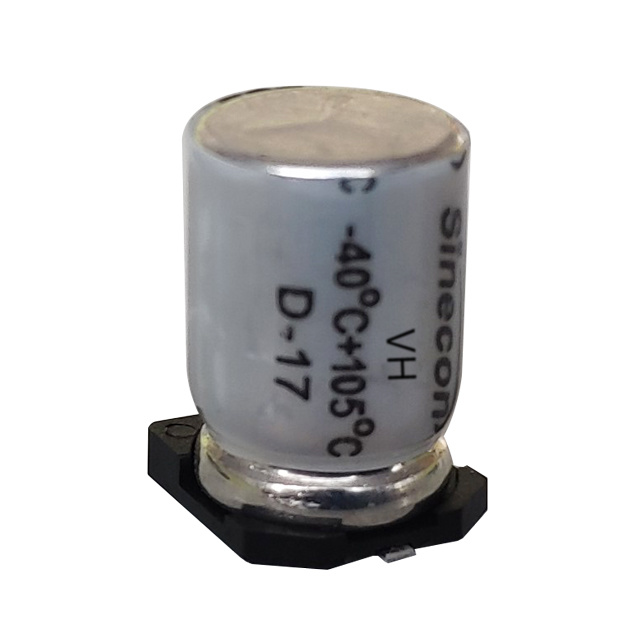
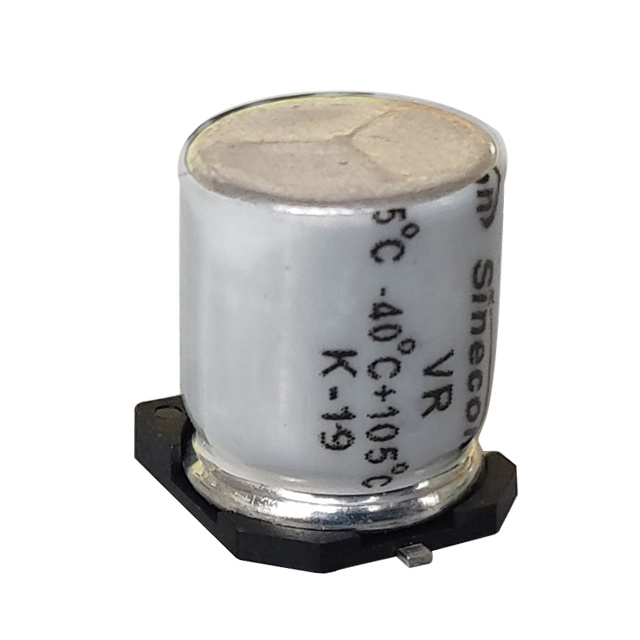
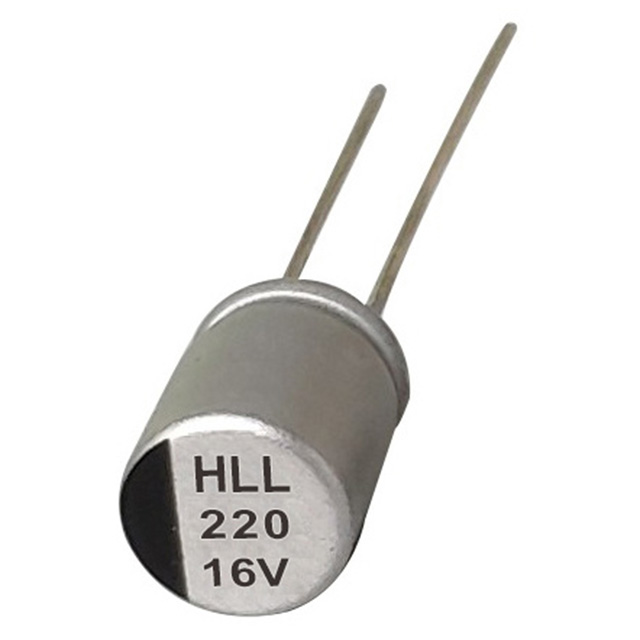
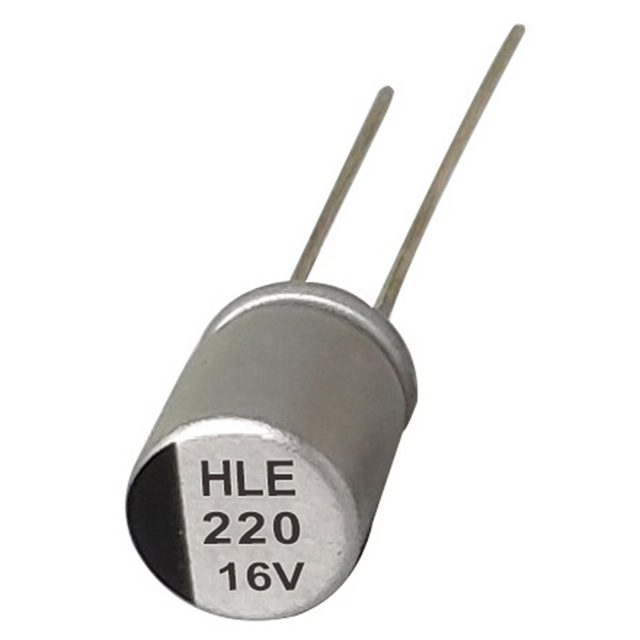
- Polymer aluminum electrolytic capacitors: Replace the liquid electrolyte with a conductive polymer, achieving ESR values of 5–20 mΩ and SRF values above 2 MHz for small capacitances. These bridge the gap between standard electrolytics and film capacitors in many switching applications.
- Hybrid polymer capacitors: Combine a polymer cathode with a liquid electrolyte layer to combine high capacitance with improved high-frequency performance and long life.
Even with these advancements, no radial electrolytic capacitor matches a film capacitor's performance above 1 MHz in terms of dissipation factor, impedance stability, or phase accuracy.
The decision between radial electrolytic capacitors and film capacitors should be driven by circuit requirements, not cost alone. Use the following criteria as a practical guide:
- If you need large capacitance (>10µF) at low frequencies (<10 kHz) and cost is a priority, radial electrolytic capacitors are the right choice.
- If your circuit involves frequencies above 10 kHz or AC signal paths where phase and loss matter, switch to film capacitors.
- For mixed designs (e.g., SMPS output filters), use both in parallel: radial electrolytics for bulk charge storage and film capacitors for high-frequency ripple suppression.
- Where board space is constrained and moderate high-frequency performance is needed, polymer radial electrolytic capacitors offer a practical middle ground.
In summary, radial electrolytic capacitors and film capacitors are complementary technologies rather than direct substitutes. Understanding their frequency behavior, parasitic parameters, and application context allows engineers to deploy each type where it delivers the most value — and avoid the performance pitfalls that come from using the wrong component in the wrong circuit.