 English
 русский
 Tiếng Việt
 Español

AC Capacitor Size: Matching Microfarads, Voltage, and Physical Fit
A practical guide for technicians and engineers who need the right capacitor the first time.
You open a condensing unit, and the run capacitor is bulged. The label is faded, and the only visible number is a partial microfarad rating. Guessing here is expensive. The correct AC capacitor size is not a preference; it is a calculated value that depends on the compressor or fan motor winding, the supply voltage, and the expected ambient temperature. Get it wrong, and you risk a stalled compressor, tripped overloads, or a motor winding that overheats within weeks.
This guide explains what “size” really means for an AC capacitor, how to verify the required microfarad rating, and which tolerances and voltage ratings matter. It also covers the difference between start and run capacitors, because their sizes sit in very different ranges.
Why AC Capacitor Size Is Not a Guess
An AC capacitor’s microfarad (μF) rating sets the phase shift between the start and run windings of a single-phase motor. That phase shift determines starting torque and running efficiency. If the capacitance is too low, the motor may hum, draw high current, and fail to start. If it is too high, the winding current rises, and the motor runs hotter than designed.
Voltage rating is equally important. A capacitor rated for 370 VAC will not survive long on a 440 VAC circuit, even if the μF value matches. Physical size must also fit the mounting bracket and terminal spacing. A capacitor that is electrically correct but mechanically wrong can vibrate loose or arc across terminals.
“The capacitor is the cheapest part in the motor circuit, but the wrong size can destroy the most expensive part—the compressor.”
Key Ratings That Define AC Capacitor Size
Four parameters decide whether a capacitor will work in a given air conditioner: capacitance, voltage, tolerance, and temperature rating. Frequency also matters, but in most 50/60 Hz systems it is already fixed by the design.
| Parameter | Typical Range | Impact on Motor |
|---|---|---|
| Microfarad (μF) | 5–80 μF for run; 100–300 μF for start | Sets phase shift and starting torque |
| Voltage (VAC) | 370 VAC or 440 VAC for run | Must meet or exceed circuit voltage |
| Tolerance | ±5% or ±10% | Affects repeatability and motor current |
| Operating temperature | -40°C to +70°C or +85°C | Higher temperature shortens life |
| Frequency | 50/60 Hz | Affects capacitive reactance |
For a run capacitor, the μF value usually falls between 5 μF and 80 μF. Start capacitors are much larger—often 100 μF to 300 μF—because they provide a brief burst of torque. Dual-run capacitors combine two values in one can, such as 35/5 μF, where 35 μF serves the compressor and 5 μF serves the fan motor.
How to Match Capacitor Size to Your AC Unit
Start with the original capacitor label. If it is readable, copy the μF, voltage, and tolerance exactly. If it is not, work through these steps in order.
- Read the original capacitor label. Even a partial number can narrow the range.
- Check the motor nameplate. Some manufacturers list the required capacitor μF in the technical data.
- Consult the equipment service manual or manufacturer’s parts list. This is the most reliable source.
- If no data is available, use a capacitor meter to measure the old part. A reading more than 10% below the marked value indicates replacement.
- Never substitute a different μF value “just to get it running.” The motor may start, but it will not last.
When the original label is missing, you can estimate the run capacitor size from the compressor’s rated horsepower. As a rough field rule, a 1 HP compressor often uses around 25–30 μF at 370 VAC, while a 3 HP compressor may need 45–60 μF. These are starting points, not final answers. Always verify with the motor data.
Info: A capacitor meter is more reliable than a visual inspection. Bulging is a clear failure sign, but a capacitor can drift out of tolerance without any visible change.
Start vs Run Capacitors: Different Sizes, Different Jobs
Start capacitors are designed for short-duty cycles. They typically use a higher μF value and are often rated for lower voltage. Run capacitors stay in the circuit continuously and must handle higher voltage and temperature. Mixing them up will cause rapid failure.
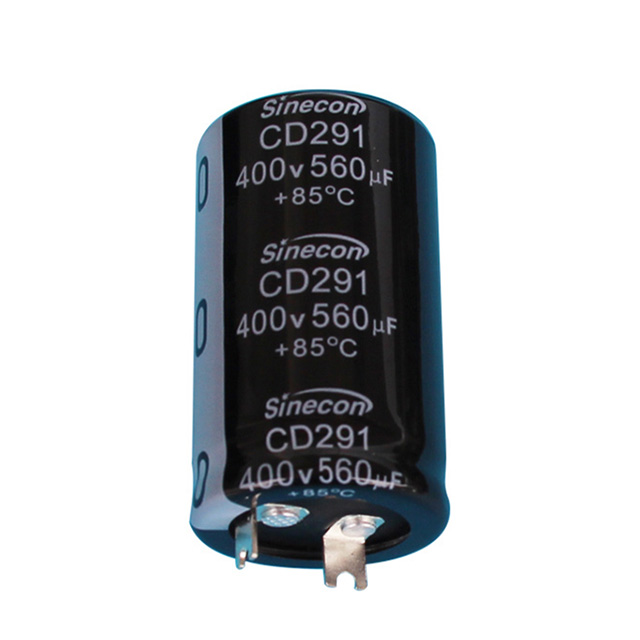
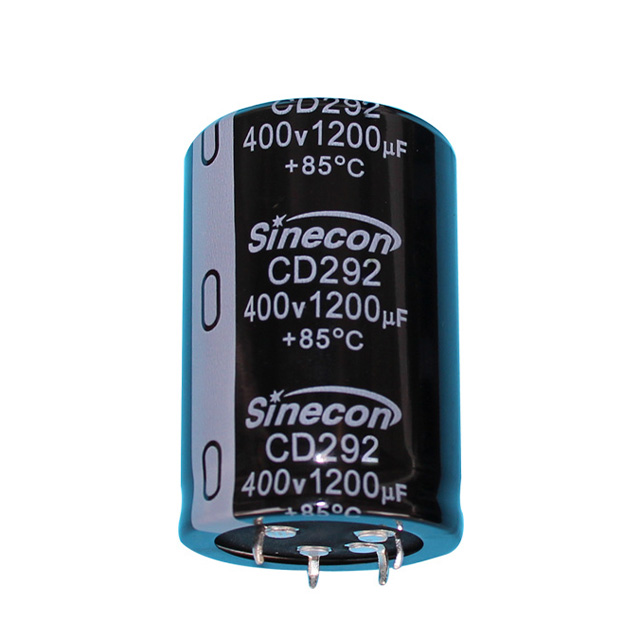
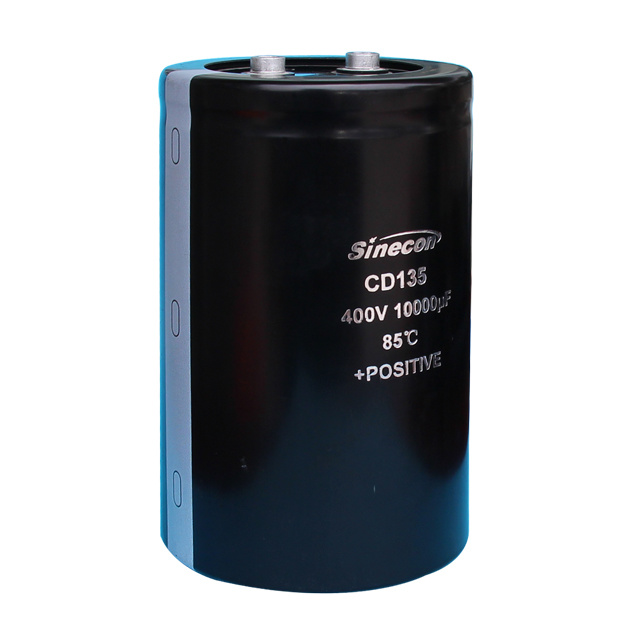
For motor starting applications, aluminum electrolytic capacitors such as the CD60 series provide high capacitance in a compact bolt-terminal package. For air conditioner run duty, long-life bolt-terminal capacitors like the CD13L series are built to handle continuous ripple current and elevated temperatures.
Tolerance, Voltage, and Physical Fit
Once you know the μF value, check three more details before ordering.
- Voltage: Choose a capacitor rated for the same or higher voltage. A 440 VAC capacitor can replace a 370 VAC part, but not the other way around.
- Tolerance: ±5% is tighter than ±10%. For critical compressor circuits, tighter tolerance helps maintain consistent starting current.
- Physical size: Measure the case diameter, height, and terminal spacing. A capacitor that is too tall may not fit under the cabinet; one with the wrong terminal spacing may not connect properly.
Warning: Never use a capacitor with a lower voltage rating than the original, even if the μF value is correct. The capacitor may fail shorted and cause a dangerous overload.
When to Replace and What to Measure
Use a capacitor meter that can measure microfarads. Disconnect the capacitor, discharge it safely, and measure. Compare the reading to the marked value. A capacitor that reads less than 90% of its rated μF is generally considered weak. Also check for bulging, leaking electrolyte, or burnt terminals.
Remember that temperature affects capacitor life. A capacitor running at 10°C above its rated temperature may lose half of its expected life. That is why long-life series with high temperature ratings are preferred in rooftop units and high-ambient installations.
If you are unsure how much a capacitor’s value can drift before replacement, review the capacitance variation data for aluminum electrolytic types. The same aging principles apply to many AC capacitors.
“Measure, verify, then replace. A five-minute check with a meter prevents a five-hour callback.”
Bringing It All Together
Selecting the right AC capacitor size comes down to three numbers: microfarads, voltage, and tolerance. Match those to the motor and the circuit, confirm the physical dimensions, and choose a capacitor rated for the real operating temperature. When you need a reliable source for motor-start and air-conditioner-duty aluminum electrolytic capacitors, look for series that state their ripple current, temperature, and life ratings clearly. That transparency makes the next replacement faster and safer.