 English
 русский
 Tiếng Việt
 Español


Component Field Guide
Radial Electrolytic Capacitor Applications: Power, Drives and Everyday Electronics
A practical, experience-led look at where radial leaded aluminum electrolytic capacitors earn their place—and how to choose them without overengineering the board.
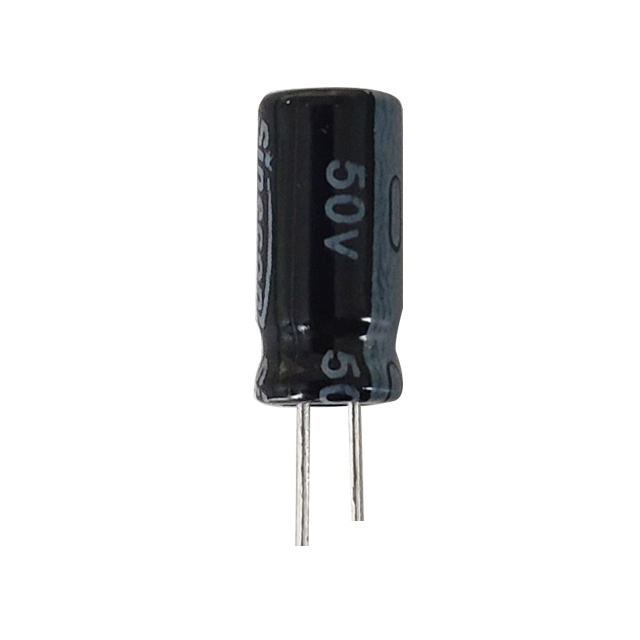
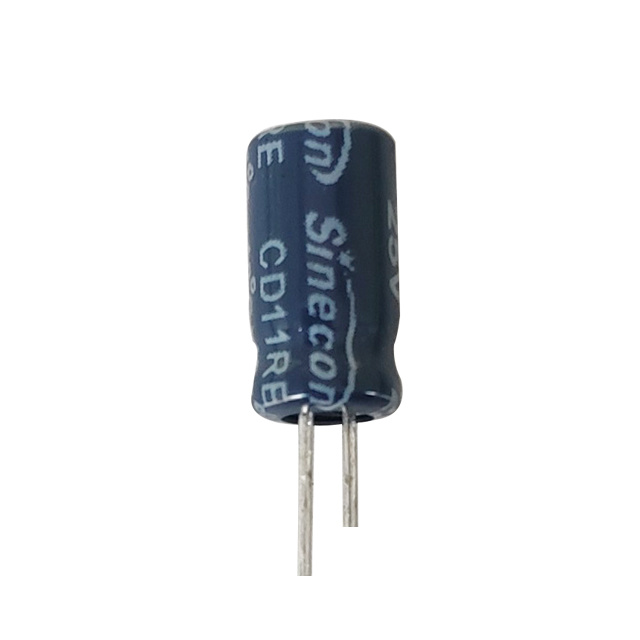
Radial electrolytic capacitors are easy to overlook. They sit close to the load, take up modest board space, and quietly absorb the ripple that would otherwise reach sensitive circuits. Yet in power supplies, motor drives, charging equipment and compact consumer products, the radial package often carries the reliability burden for the whole design.
In our work with aluminum electrolytic capacitors across low-voltage, medium-high-voltage and polymer families, the same pattern appears: successful radial electrolytic capacitor applications start with a clear view of the operating environment, not with a part number. The capacitor must match the ripple, temperature, lifetime and footprint the circuit can tolerate.
The radial capacitor is a quiet workhorse: small enough to fit near the load, rugged enough to absorb the ripple that would otherwise reach the rest of the circuit.
Why Radial Leaded Capacitors Still Matter
The radial leaded format remains popular because it balances three practical needs: compact size, straightforward through-hole assembly and useful capacitance per unit volume. In circuits where the capacitor must sit near a switching node, connector or local load, radial parts shorten the current path and simplify layout.
- Local decoupling and smoothing in switch-mode power supplies.
- Bulk energy storage where the board can accept a through-hole part.
- Ripple absorption in motor drives, inverters and UPS modules.
- Cost-sensitive designs that still need stable long-life performance.
Radial parts are not a universal replacement for snap-in or screw-terminal capacitors. They serve different points in the power chain. A radial capacitor is often the local worker; a snap-in or screw-terminal device is the bulk reservoir. Recognizing that division keeps the bill of materials honest.
For a deeper technical walkthrough, see our guide to radial electrolytic capacitors.
Applications Map: Where Radial Electrolytic Capacitors Do Their Best Work
The same radial package appears across very different products. What changes is the stress profile: continuous ripple, peak current, ambient temperature, humidity and expected service life.
Power Supplies and DC-Link Smoothing
Switch-mode power supplies use radial capacitors for input filtering, output smoothing and local decoupling. Low-voltage series with low resistance and high ripple ratings are common in compact adapters, LED drivers and fast-charging power stages. The capacitor must handle the switching ripple without overheating, especially when the enclosure leaves little room for airflow.
In these designs, a high-temperature-resistant low-voltage radial series such as the CD11HE can be a practical fit when the board needs a compact part with stable performance near warm components.
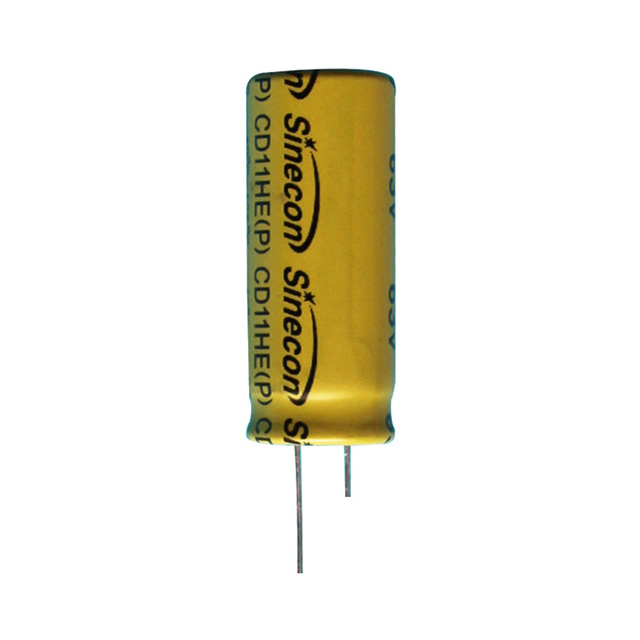 CD11HE High-Temperature Low-Resistance Radial Electrolytic CapacitorA compact low-voltage radial capacitor for warm control boards, offering high-temperature resistance, low impedance and long life in industrial drive and power-supply circuits.View Product →
Motor Drives, Inverters and UPS
Industrial drives, servo systems, solar inverters and UPS units place radial capacitors in control boards, gate-drive circuits and auxiliary power rails. Here the capacitor may see higher voltages, wider temperature swings and long operating hours. Medium-high-voltage radial series with long life and low resistance help keep the control electronics stable while the power stage does the heavy lifting.
A long-life medium-high-voltage radial option, such as the CD11LL series, is often considered where the control board must remain reliable across repeated thermal cycles.
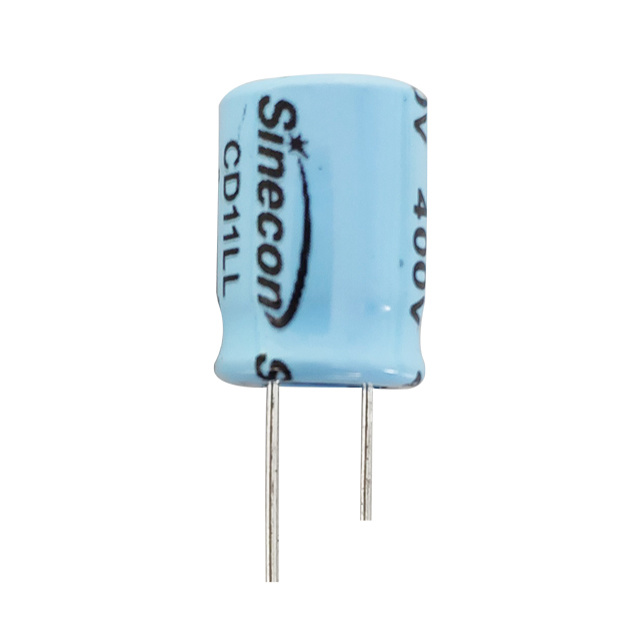 CD11LL Long-Life Medium-High-Voltage Radial CapacitorA medium- and high-voltage radial capacitor with low impedance and up to 8,000-hour life for control boards in charging, telecom and LED power supplies.View Product →
Charging, Telecom and Lighting
Charging piles, telecom power supplies and LED drivers share a need for compact filtering and dependable life in enclosed housings. Radial capacitors smooth rectified AC, buffer transient loads and support constant-current control. In outdoor or humid locations, sealing, storage and mounting practices matter as much as the capacitor rating.
Audio, Instrumentation and Special Radial Designs
Special radial capacitors serve audio signal paths, bipolar circuits and applications that need low impedance or high-temperature tolerance. These are smaller-volume uses, but they show why a single radial package family can branch into many performance variants.
| Application area | What the capacitor does | Traits to prioritize |
|---|---|---|
| Power supplies | Input/output smoothing, local decoupling | Low ESR, high ripple, compact size |
| Motor drives and inverters | Control-board filtering, transient buffering | Long life, voltage margin, temperature stability |
| UPS and telecom power | Hold-up and ripple absorption | Reliability, low leakage, stable capacitance |
| Charging and LED drivers | Rectified AC smoothing, load buffering | High ripple, small footprint, heat tolerance |
| Audio and instrumentation | Signal-path coupling, bipolar operation | Low impedance, low leakage, matched characteristics |
Selection Signals: Reading the Datasheet Like a Designer
A radial electrolytic capacitor is not chosen by capacitance alone. The datasheet is a set of trade-offs, and the application decides which trade-off matters most.
- Voltage rating: leave margin for transients, but do not assume a higher rating is always better.
- Ripple current: compare the expected ripple at the actual switching frequency and temperature.
- ESR: lower is helpful in high-frequency filtering, but it must be balanced against size and cost.
- Temperature and life: use the rated life and temperature rise to estimate service life in the enclosure.
- Mounting and spacing: radial leads need room for solder joints, cleaning and thermal expansion.
Voltage, Ripple and ESR Are a Conversation
Voltage margin protects against transients, but excessive margin can push the designer toward a larger case size. Low ESR improves high-frequency performance, yet it can increase inrush current. The sensible approach is to match the part to the measured or simulated stress profile, then verify it on the bench.
Temperature, Life and Ripple: The Quiet Trade-offs
Aluminum electrolytic capacitors age faster as temperature rises. Every 10°C increase can shorten expected life, which is why thermal placement deserves as much attention as the electrical rating. Keep radial capacitors away from hot resistors, power devices and transformers when the layout allows.
Ripple current also creates internal heating. If the capacitor sits at the output of a high-frequency converter, check the ripple rating at the switching frequency rather than only at 100 Hz. For long-life industrial products, a medium-high-voltage radial series with low resistance and a generous temperature rating can be a better fit than a smaller, cheaper part.
When Polymer Makes More Sense
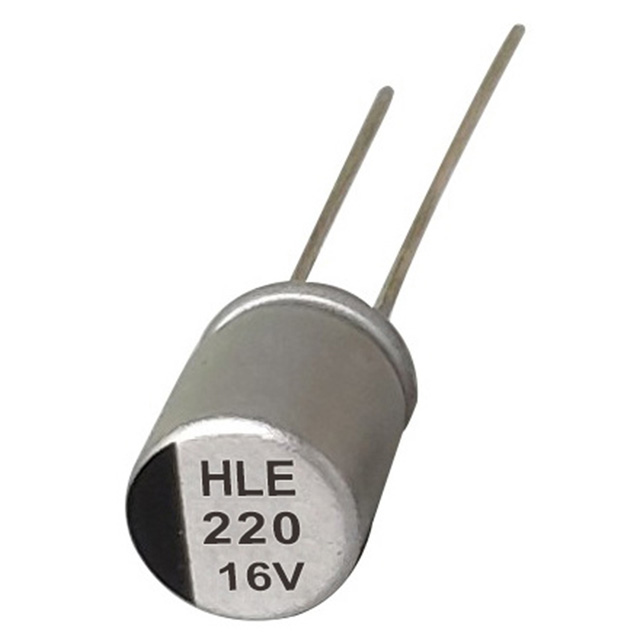
Solid polymer radial capacitors offer low ESR and stable performance in high-frequency circuits. They are useful in compact power stages, decoupling near fast switching devices and applications where low impedance matters more than the lowest possible cost. The trade-off is usually capacitance density and budget, so polymer parts tend to appear where their electrical behavior solves a real problem.
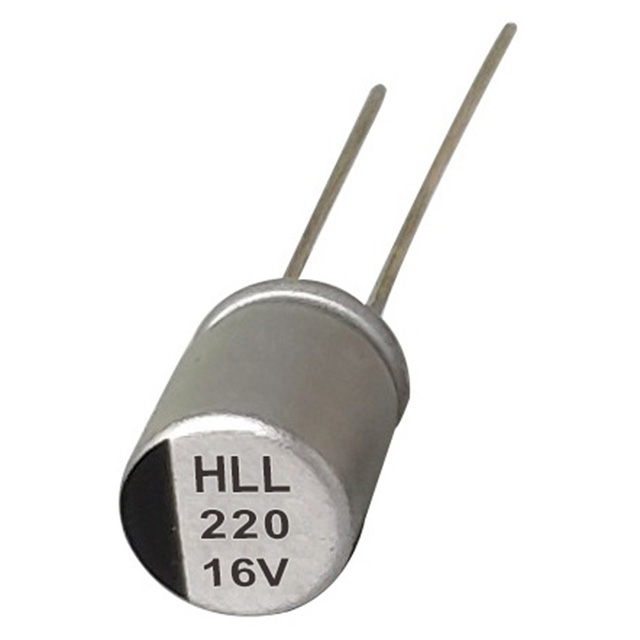
A high-ripple low-ESR radial polymer series such as the HLL is worth considering when the design needs tight filtering in a small space and the operating profile supports a solid polymer solution.
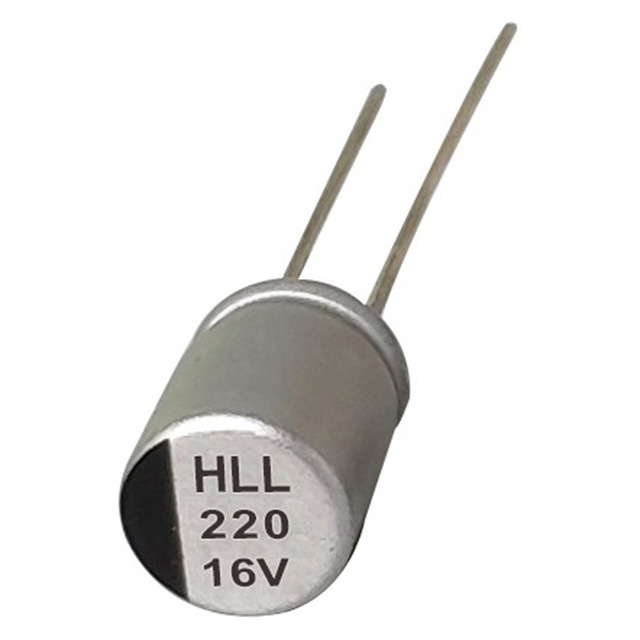 HLL High-Ripple Low-ESR Radial Polymer CapacitorA solid polymer radial capacitor for compact high-frequency filtering, offering low ESR and high ripple handling in power supplies and voltage-regulation circuits.View Product →
Polymer capacitors are not a blanket upgrade. Use them where low ESR, high ripple handling or stable high-frequency behavior earns its place; otherwise, a well-selected aluminum electrolytic radial part may be the more balanced choice.
From Prototype to Production: Practical Integration Notes
Good radial electrolytic capacitor applications are built on small assembly details. Lead spacing, case diameter, vent clearance and cleaning compatibility all affect yield and long-term reliability.
- Confirm polarity before assembly; reverse bias can damage the capacitor quickly.
- Allow space for the safety vent and avoid potting compounds that trap heat.
- Check storage conditions and soldering profiles, especially for low-voltage and polymer parts.
- Validate ripple and temperature in the final enclosure, not only on an open bench.
A Sensible Starting Point for Your Next Design
Radial electrolytic capacitor applications are broad, but the selection logic is consistent: understand the stress, choose the right package and performance family, then verify the part in the real thermal environment. Radial capacitors remain valuable because they place reliable filtering and energy storage close to the point of use.
Whether the design is a compact charger, a motor-control board, a telecom power supply or an audio circuit, the best capacitor is the one that matches the application rather than the one with the longest list of claims. That is the practical art of radial electrolytic capacitor selection.